Sector Spotlight: Composting

Discover the trends that private market dealmakers need to know about investing in the composting sector, from growth trends to fragmentation to top companies in the space.
Industrials
Private Equity
Market Trends
Sector Spotlight: Composting

M&A in the waste management industry is expected to gain momentum in 2026 as more private equity firms turn to roll-up strategies and interest rates level out.  

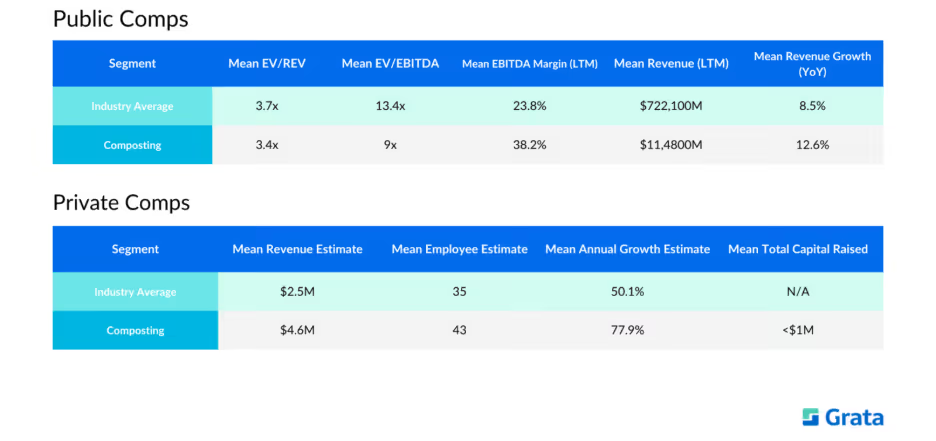
Composting will likely be a key driver of activity. The sector leads the waste management industry in terms of growth, with an average annual growth rate of 77.9%. Here’s what private market dealmakers need to know.
Fertile Areas in the Composting Space

Source: Grata

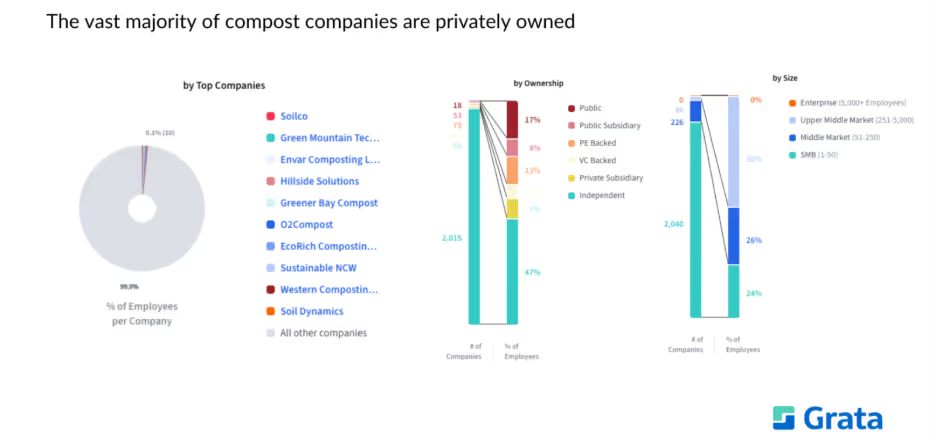
Composting companies account for 3.8% of the broader waste management industry. Though the space is small, it is ripe with acquisition opportunities. There are currently over 2,000 privately owned companies in the space.
What’s Feeding Activity in the Composting Space

Source: Grata

Composting companies see the highest average growth rates in the waste management industry by a long shot, in both the public and private markets. This is the result of several key factors converging:

  • New environmental regulations are increasingly popping up at the state and locality level banning food and organic waste from landfills.  
  • Consumer demand is shifting. Interest in organic food, home gardening, and sustainable landscaping saw a boost during the pandemic, and it has continued to grow.  
  • Government support and infrastructure for composting programs are growing to accommodate evolving regulations and shifting consumer sentiment.
  • Technology such as smart sensors, robotics, and processing efficiency solutions are making compost processing operations more effective and easier to scale.
  • Companies in the CPG industry are increasingly seeking compostable alternatives to plastic packaging.

Composting companies also tend to see the highest average margins out of the sectors analyzed in the PE Playbook: Waste Management. Diverting organic waste from landfills reduces disposal fees for composting companies and their clients. Additionally, the natural decomposition involved in composting requires less energy than traditional waste processing, lowering processing costs.  
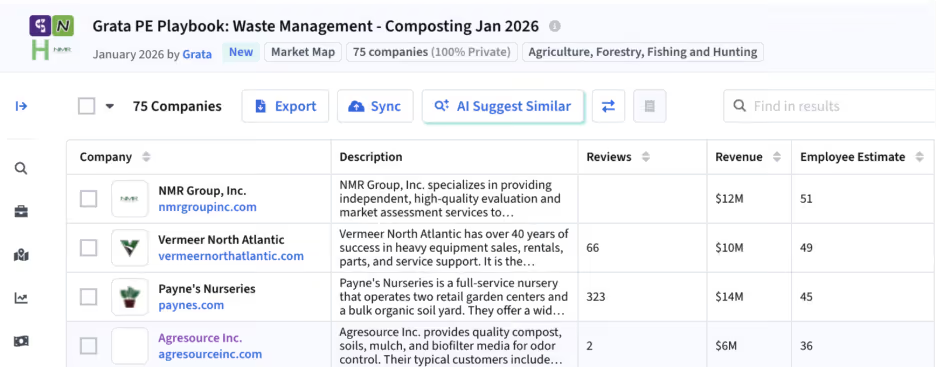
Top Companies in the Composting Sector

Source: Grata

The Grata team has curated a list of top private companies in the composting sector. These companies have been selected based on their revenue and employee headcount compared to the industry averages.

Grata users can see the list here.

Take Action with Grata

If you’re a private market dealmaker looking to make moves in the composting space, Grata can help you put the insights in this article into action.

From in-depth market research to sourcing to pipeline management and relationship nurturing, Grata’s end-to-end dealmaking platform streamlines your workflows so that you can close more deals.

Schedule a demo today to get started.

Subscribe to our newsletter

Monthly tactics from Grata’s team and operators.

Related
Articles

From market trends to career advice, Grata’s content fuels smarter decisions.

The PE Playbook: Fire Safety
Industrials
Data

The PE Playbook: Fire Safety

Climate change, data centers, and new battery storage tech are posing unprecedented fire risks and reshaping fire safety M&A. Learn about the fire safety industry's fragmentation, growth trends, recent acquisitions, and more.
Hidden Gems: Actionable, Undiscovered Opportunities in IT Infrastructure
Data
Energy/Infrastructure

Hidden Gems: Actionable, Undiscovered Opportunities in IT Infrastructure

Learn about the undiscovered IT infrastructure opportunities in the Grata platform. Explore trends in ownership, market segments, and emerging M&A opportunities.
Why Proprietary Deal Flow Is Getting Harder — and How Leading Teams Are Adapting
Sourcing

Why Proprietary Deal Flow Is Getting Harder — and How Leading Teams Are Adapting

Proprietary deal flow is getting harder as generalist AI closes the access gap. See how verified private-market data and Seller Intent help dealmakers source before the competition does.
What Is a Data Room? A Private Market Dealmaker’s Guide
Data

What Is a Data Room? A Private Market Dealmaker’s Guide

Understand why private market deal teams need data rooms, the difference between a data room and a deal sourcing platform, and more.
How to Identify Companies Preparing to Sell Before the Competition
Sourcing

How to Identify Companies Preparing to Sell Before the Competition

Learn how to identify companies preparing to sell before a formal process starts, using behavioral signals that flag seller intent 6–12 months early.
The New Deal Team: How AI Is Changing Every Role in M&A
AI & Automation

The New Deal Team: How AI Is Changing Every Role in M&A

AI is reshaping every role on the M&A deal team — from analyst to partner. Here's what that means for the firms building for the next generation of dealmaking.
Early Deal Intelligence: The New Private Market Competitive Advantage
Business Development
Data/Analytics

Early Deal Intelligence: The New Private Market Competitive Advantage

What is early deal intelligence? Learn how Grata's Seller Intent flags companies preparing to sell, 6-12 months before a formal process begins.
Blue backgound