
AI & Automation
Buy-Side
How AI Agents Are Changing Investment Committee Preparation
Discover how AI agents are transforming investment committee preparation by streamlining research, updating IC memos, and strengthening investment analysis.

.webp)

As the old adage goes, one man’s trash is another man’s treasure. And there is plenty of treasure to be found in waste management. Globally, the industry is currently valued at around $1.7T. With increasing urbanization, a growing global population, and rising urbanization generating more waste, that number is expected to balloon to over $2.4T by 2033.
M&A in the industry regained some momentum in 2025 after a dip in total transactions in 2024. With more private equity firms using roll-up strategies in the space, and with interest rates expected to level out, that momentum is expected to continue in 2026.
For private market dealmakers, waste management offers a heap of opportunities, from collection to recycling to composting and beyond.
In this PE Playbook, the Grata team has put together the need-to-know trends for investors considering making moves in the waste management market, including:
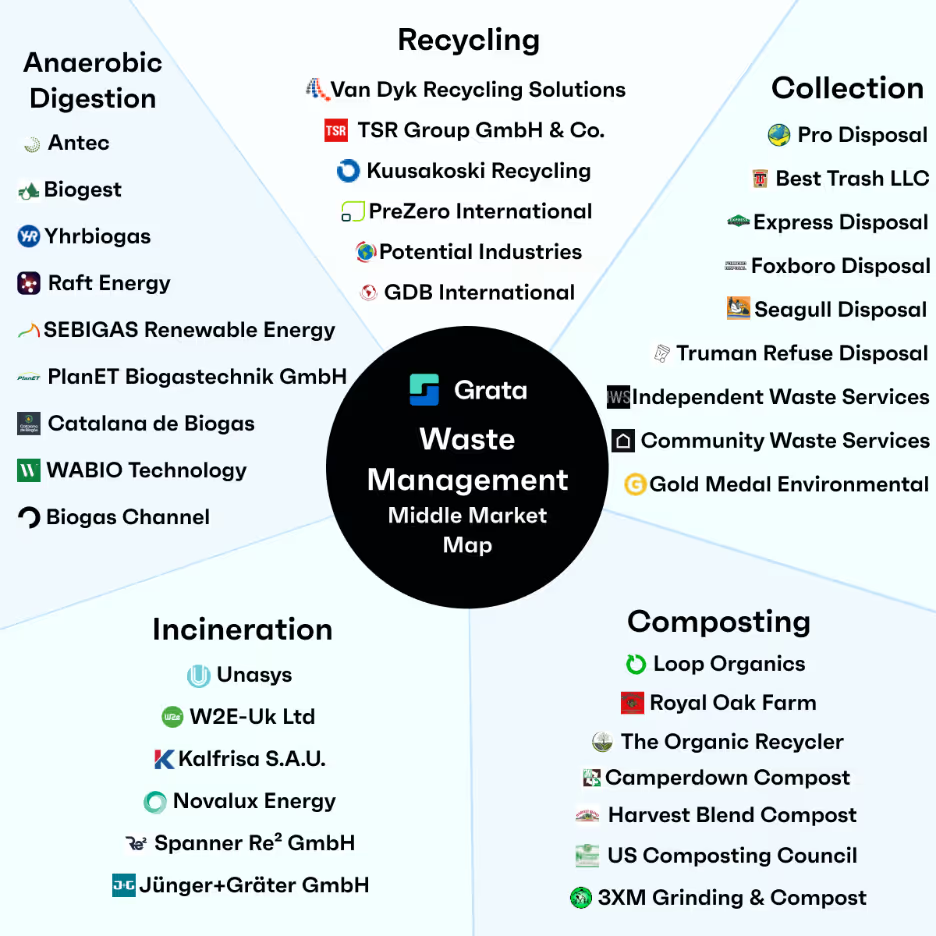
The market map above is not intended to be an exhaustive representation of companies in the space.
Companies that provide services that fall into multiple segments are categorized in this report by their primary offering.
Source: Grata
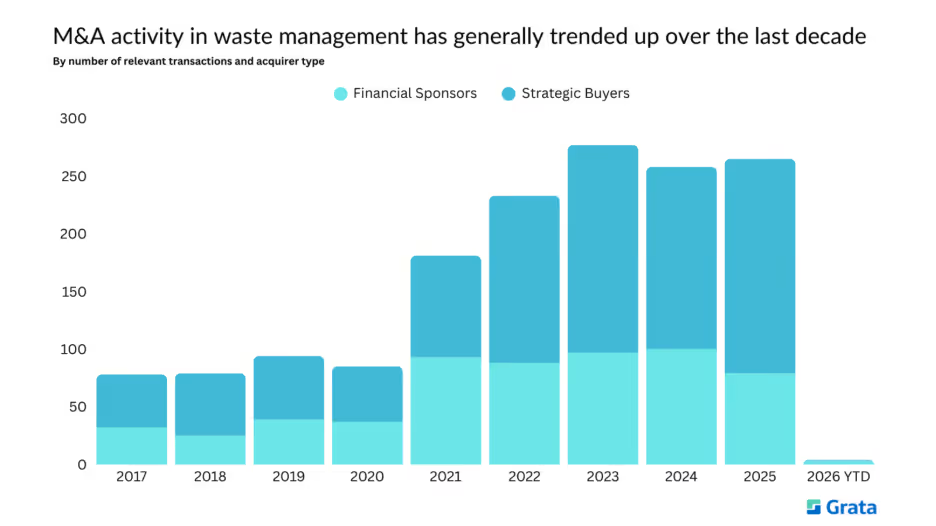
Waste management is an essential industry, and it tends to be resilient during times of economic volatility. As a result, it’s an appealing investment area for private market dealmakers.
Overall M&A activity in the space has increased significantly over the past 10 years. With interest rates expected to fall and new state-level regulations around PFAS and emissions coming into play, the waste management industry is expected to continue gaining momentum in 2026.
Source: Grata
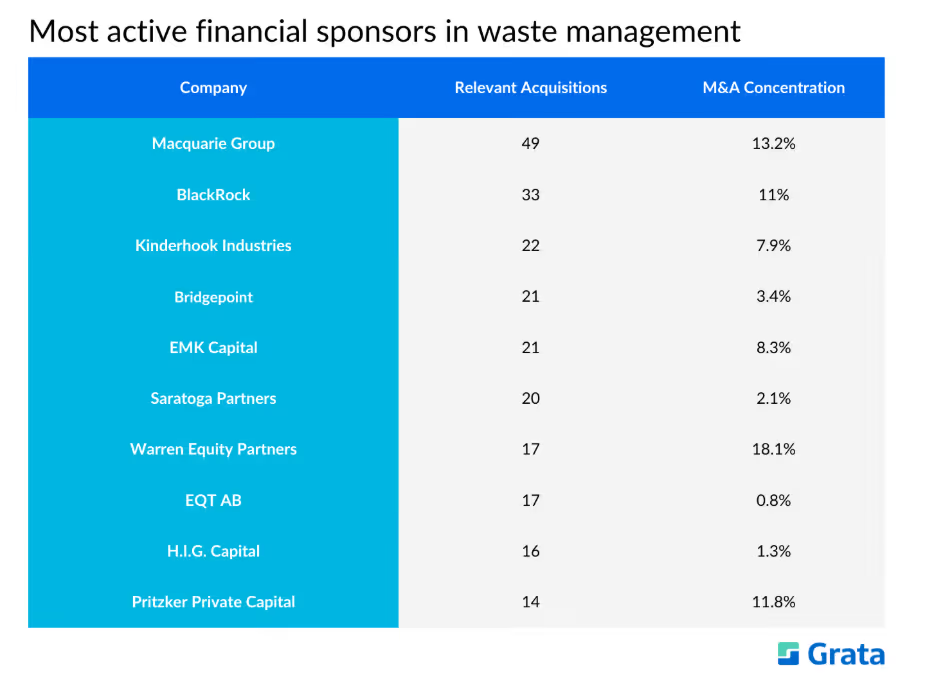
Macquarie Group tops the list of the most active financial sponsors in the waste management industry. Its acquisitions primarily include companies that provide disposal and recycling services for the industrial and commercial sectors.
Source: Grata
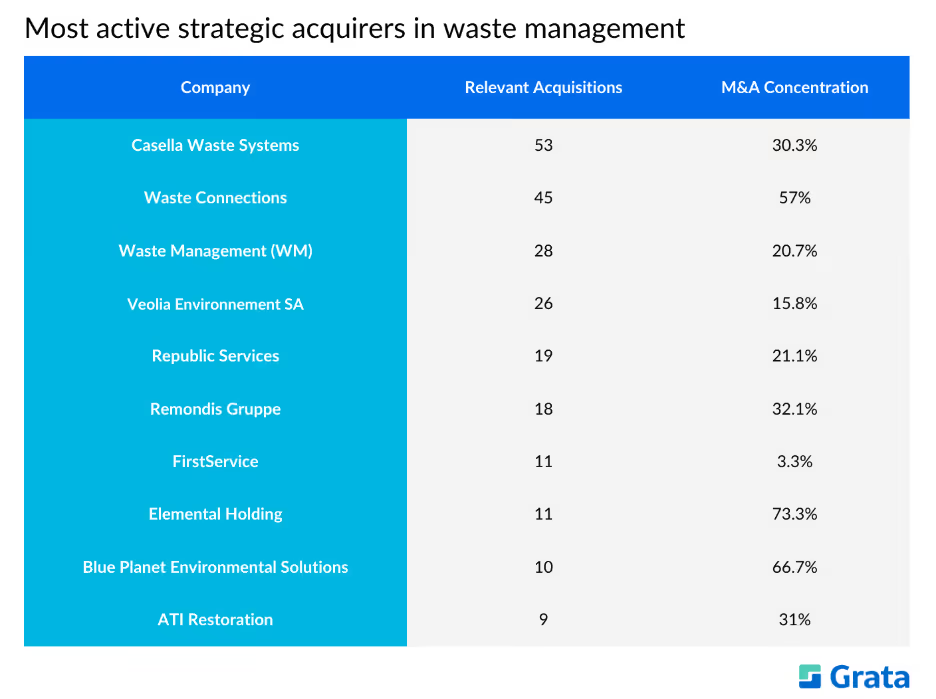
Casella Waste Systems is the most active strategic acquirer in the waste management industry. The company itself provides a wide range of services, including solid waste collection, transfer, disposal, recycling, and organic services. Its acquisitions in the industry also cover a broad array of waste management services across the residential, commercial, municipal, and industrial sectors.
Source: Grata
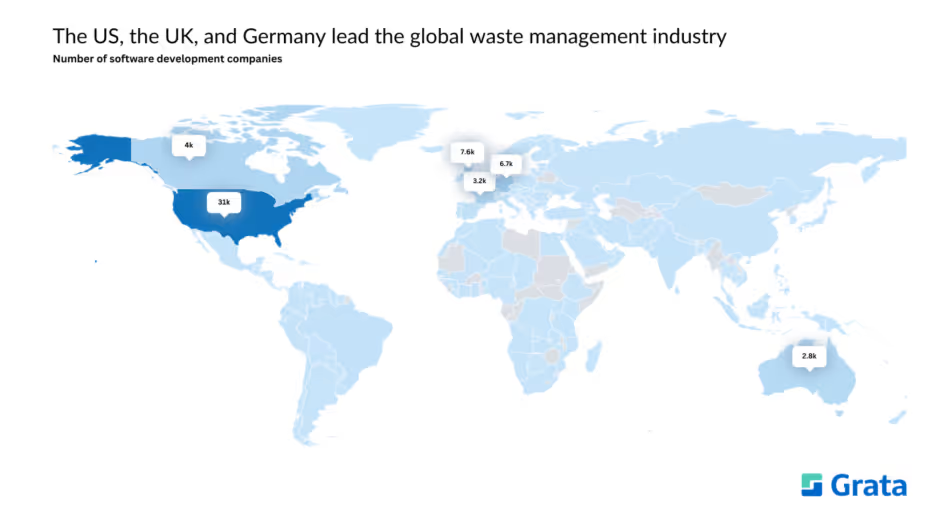
The US, the UK, and Germany take the top three spots in the global waste management industry. Other key players include Canada, France, and Australia, respectively.
Source: Grata
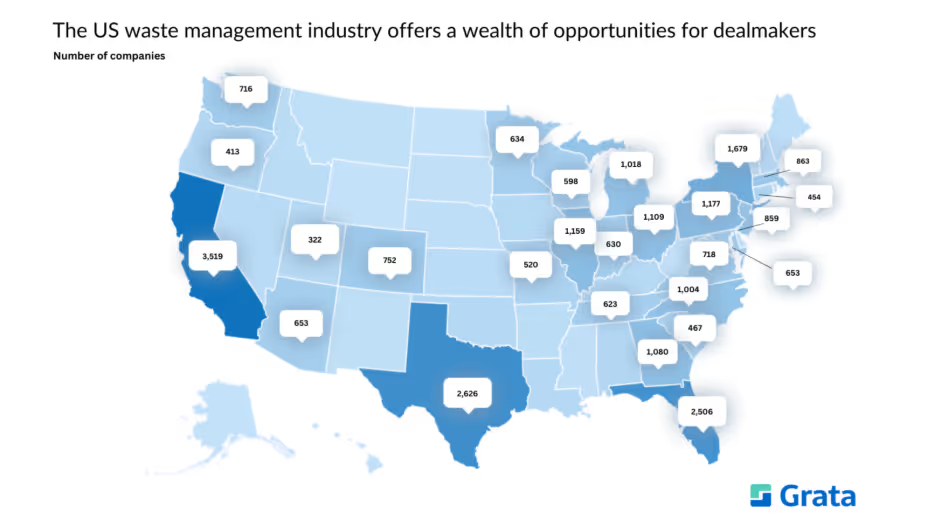
In the US, opportunities in the waste management industry span from coast to coast. California, Texas, and Florida — the three most populous states in the country — lead the market by number of companies. New York is also a key player, with a significant number of waste management companies and high job counts in the space.
Dealmakers who are interested in the recycling sector should look to Connecticut, Vermont, Oregon, Maine and California. These states consistently have some of the highest recycling rates in the country and the lowest landfill waste rates per capita. This is largely due to strong landfill reduction policies and bottle bills.
Meanwhile, California, New York, Massachusetts, Connecticut, Colorado, Washington, and North Carolina are among the top states for composting. These states have strong policies, programs, and infrastructure to support food waste disposal and processing.
Source: Grata
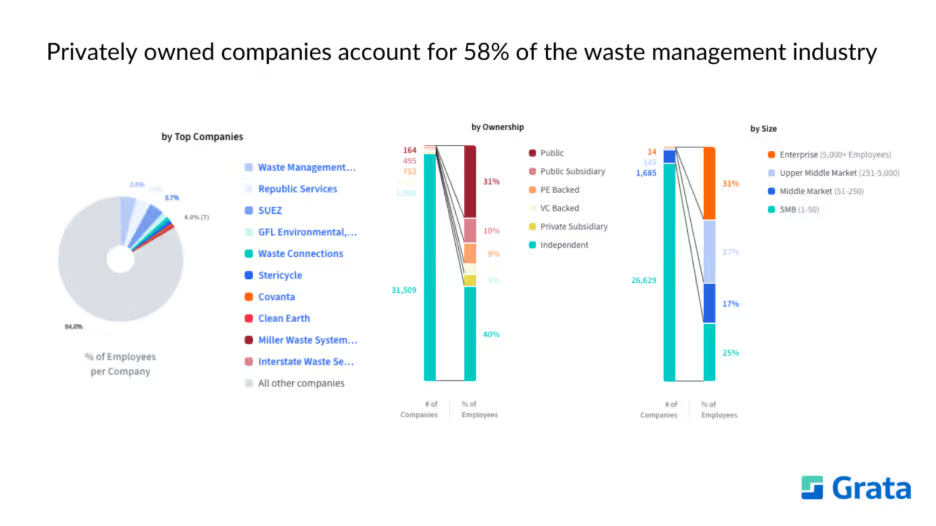
The waste management industry is highly fragmented. Privately owned companies make up 58% of the space. Currently, there are over 33,000 independent waste management businesses that are ripe for acquisition.
Source: Grata
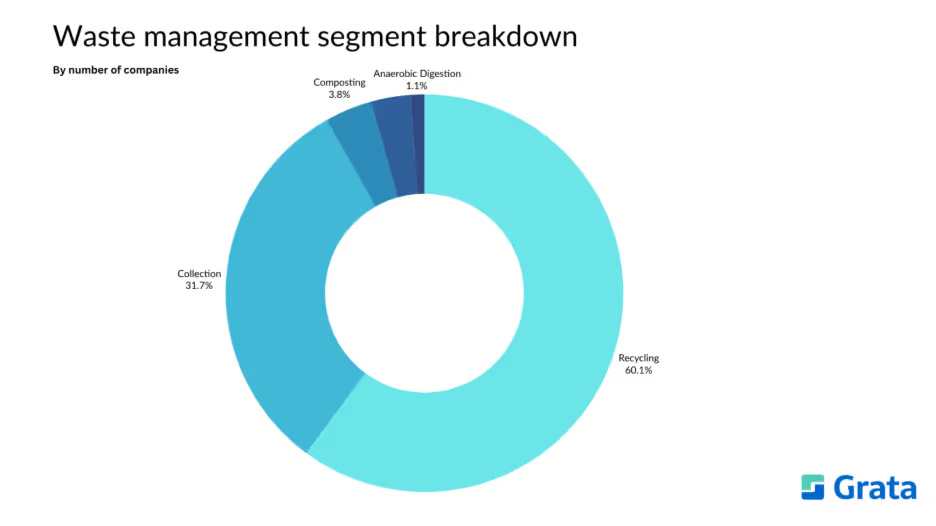
This report focuses on the following segments of the waste management industry. Grata users can see curated lists of some of the companies used to create each segment by clicking the links below.
Source: Grata
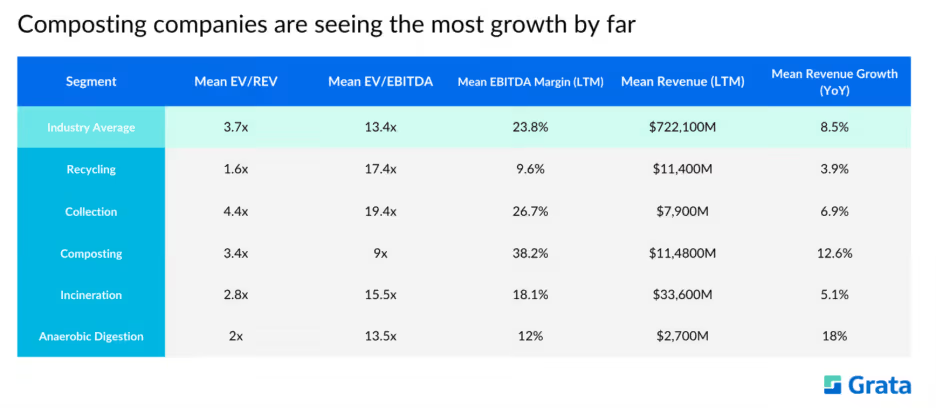
In an industry that provides such essential services, it’s difficult for dealmakers to go wrong. However, there are a few standout sectors even among this group of high performers. The composting sector, for example, leads the group in terms of average revenue growth at 12.6%. This is the result of several key factors converging:
Composting companies also tend to see the highest average margins out of the sectors analyzed in this report. Diverting organic waste from landfills reduces disposal fees for composting companies and their clients. While machinery is still needed, the natural decomposition involved in composting requires less energy than traditional waste processing, lowering processing costs.
Meanwhile, the waste incineration sector sees the highest average revenue by far. Demand is stable and competition is low. Building facilities is a costly endeavor, and environmental regulations and zoning laws are strict, creating a high barrier to entry in the sector. Additionally, incineration companies typically secure long-term contracts with municipal and commercial clients, yielding predictable revenue streams.
Source: Grata
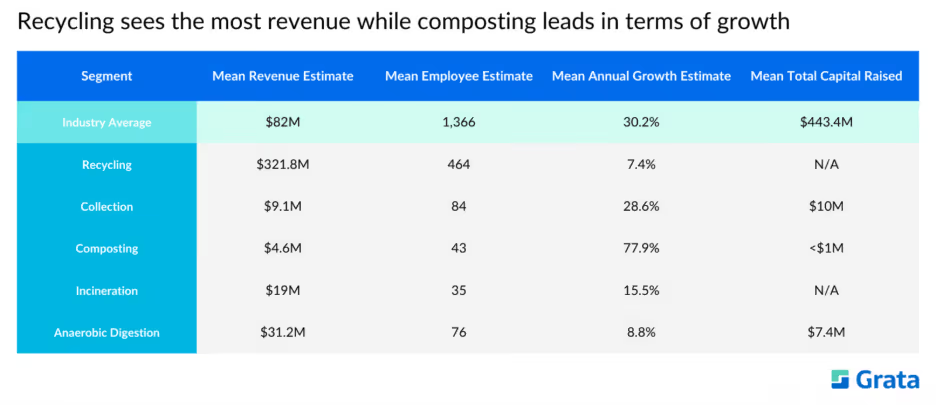
In the private sphere, recycling companies see the most average revenue by a long shot. Key revenue drivers for the sector include:
As with the public realm, private composting companies are seeing massive growth year over year. With relatively little capital raised, the sector could offer private market dealmakers a strong opportunity to establish themselves as leaders.
The anaerobic digestion sector is also worth noting, particularly for dealmakers who are interested in renewable energy. Anaerobic digestion converts organic waste into biogas, which can be turned into renewable natural gas (RNG) — a cleaner alternative to fossil fuels. These facilities generate nutrient-rich fertilizer as a byproduct, which supports a circular economy and opens up another revenue stream. The space is the second-highest earner of the sectors analyzed here. Anaerobic digestion companies have raised an average of $7.4M in funding, suggesting that there is real momentum in the space.
Source: Grata
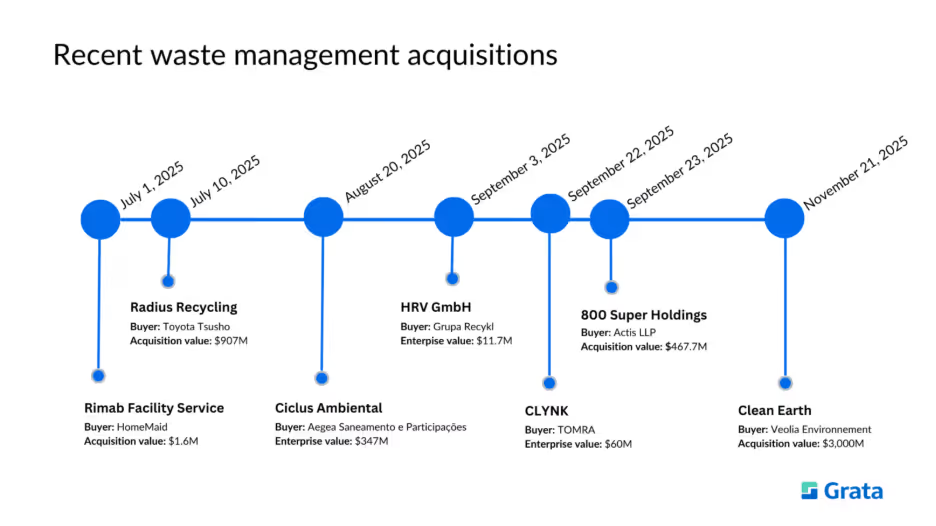
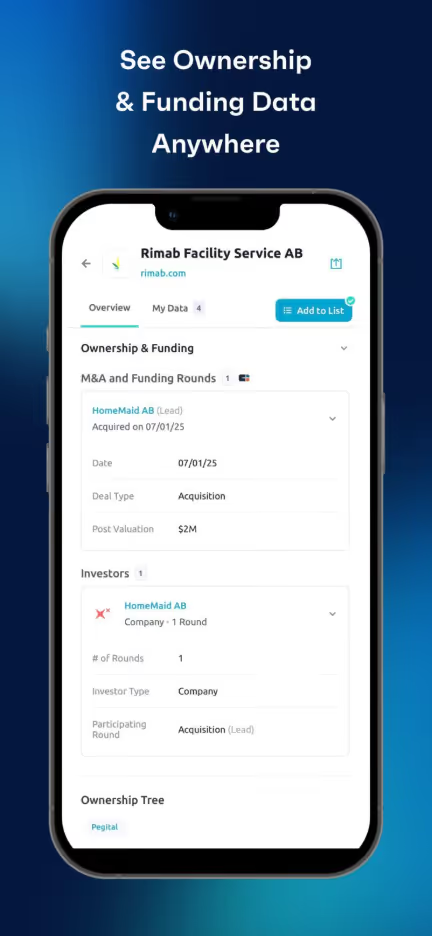
In July 2025, Sweden-based cleaning services company HomeMaid AB acquired Rimab Facility Service. Rimab was valued at $1.6M at the time of the deal. The company provides waste management services in addition to industrial cleaning, office cleaning, landscaping, and more.
If you’re an investor interested in companies similar to Rimab Facility Service, try these:
Learn more about this acquisition — or any of the others listed below — anytime, anywhere using the latest version of the Grata Go mobile app. Get all of the ownership and investment data you need right in the palm of your hand.
Supply chain management and manufacturing company Toyota Tsusho America acquired Radius Recycling in July for $1.3B. Radius Recycling is based in Portland, Oregon. It offers a wide range of waste management services, including the collection and processing of recyclable materials.
If you’re an investor interested in companies similar to Radius Recycling, try these:
In August, Brazil-based sanitation company Aegea Saneamento e Participações purchased Ciclus Ambiental. Ciclus specializes in integrated urban solid waste management, biogas production, and water demineralization. It has plans to expand into energy production from solid waste in the future. Ciclus Ambiental was valued at $347M at the time of the deal.
If you’re an investor interested in companies similar to Ciclus Ambiental, try these:
Poland-based Grupa Recykl, which specializes in tire recycling, purchased HRV GmbH in September. HRV was valued at $11.7M at the time. The company also offers a range of tire disposal services.
If you’re an investor interested in companies similar to HRV GmbH, try these:
Later in September, recycling solutions company TOMRA bought Maine-based CLYNK in a deal valued at $60M. CLYNK provides bottle and can redemption solutions for individuals and local grocery stores that can serve as drop-off points.
If you’re an investor interested in companies similar to CLYNK, try these:
Actis, a global investor in sustainable infrastructure, acquired waste treatment and management company 800 Super Holdings in September. The Singapore-based company was valued at $467.7M at the time of the deal.
If you’re an investor interested in companies similar to 800 Super Holdings, try these:
Veolia Environment, a global waste, water, and energy management company, purchased Clean Earth for $3B in November. Clean Earth is a US-based company that offers hazardous and non-hazardous waste disposal, transportation, and soil sampling services.
If you’re an investor interested in companies similar to Clean Earth, try these:
Hundreds of live deals and active mandates are being showcased on the Grata Deal Network. Here are some examples of mandates related to the waste management industry:
Grata users can see the deals directly in the Grata Deal Network using the links above.
If you’re interested in these deals and you want to see more, register to learn more here.
Are you a sell-side advisor interested in generating inbound leads for your data center infrastructure deal? Get started here.
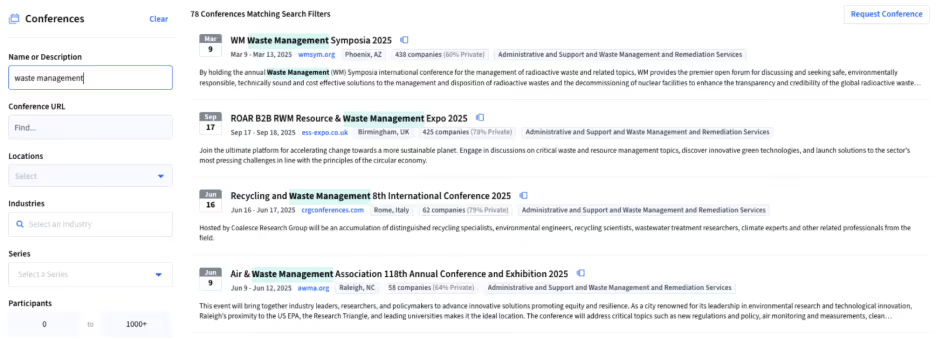
Grata makes it easy for dealmakers to find conferences, events, and trade shows in their industries. See attendee lists so you can set up meetings beforehand and make the most of your travel time. Check out which companies attended past events to find more potential targets.
Here are a few of the events related to the waste management industry that dealmakers can find and track in Grata:
If you’re an investor interested in making moves in the waste management space, Grata can help you put the insights in this article into action.
From in-depth market research to sourcing to pipeline management and relationship nurturing, Grata’s end-to-end dealmaking platform streamlines your workflows so that you can close more deals.
Schedule a demo today to get started.

Monthly tactics from Grata’s team and operators.
From market trends to career advice, Grata’s content fuels smarter decisions.
.png)
.png)

.png)
.webp)