
WHY GRATA INTELLIGENCE
More deal data for more context
Get verified insights into ~1M+ private market transactions across M&A, growth, and VC deals to understand deal value, multiples, and size and growth at the time of the transaction.
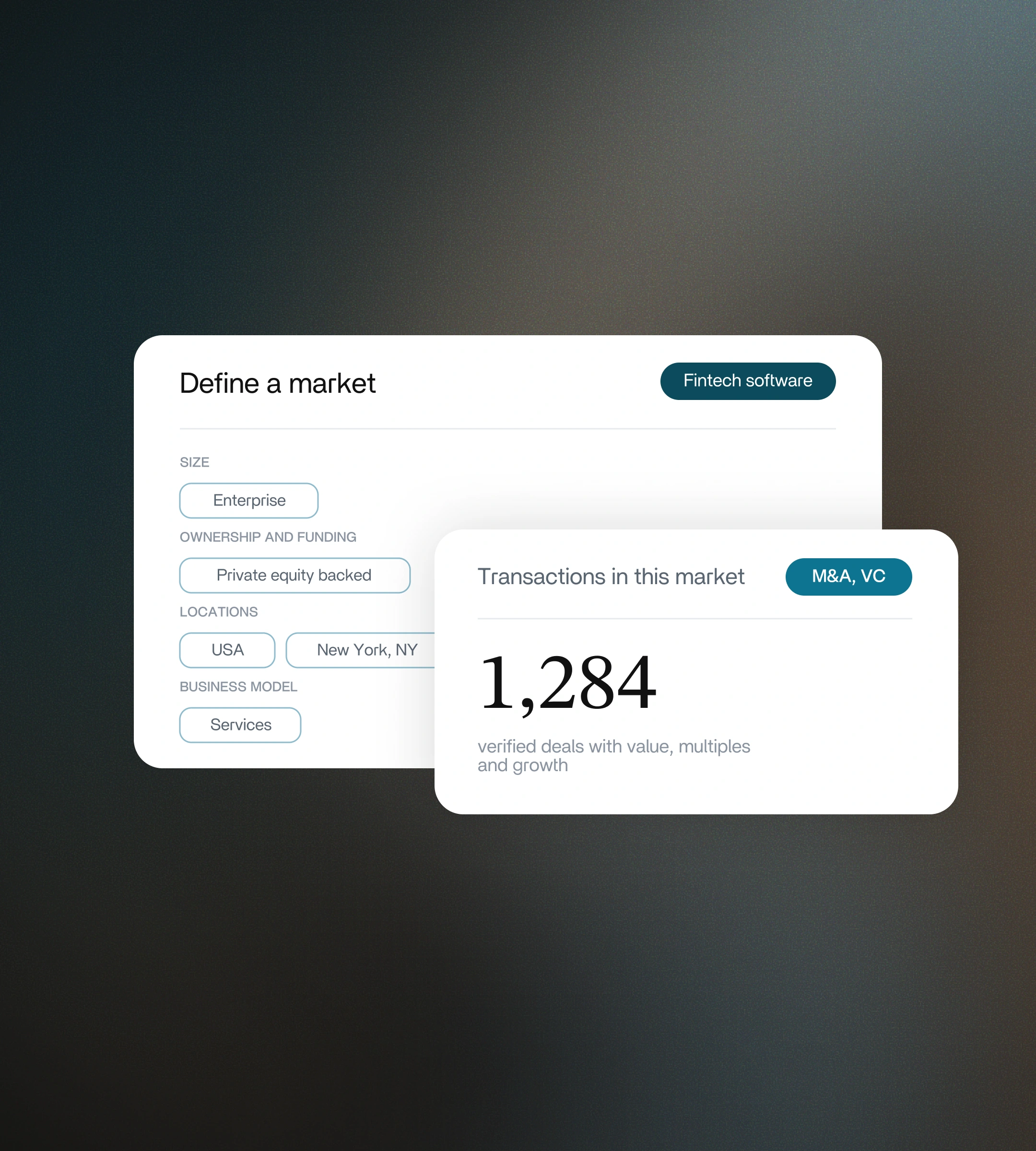

DEAL DATA
Benchmark opportunities, analyze precedent transactions, and uncover deal data with greater confidence.
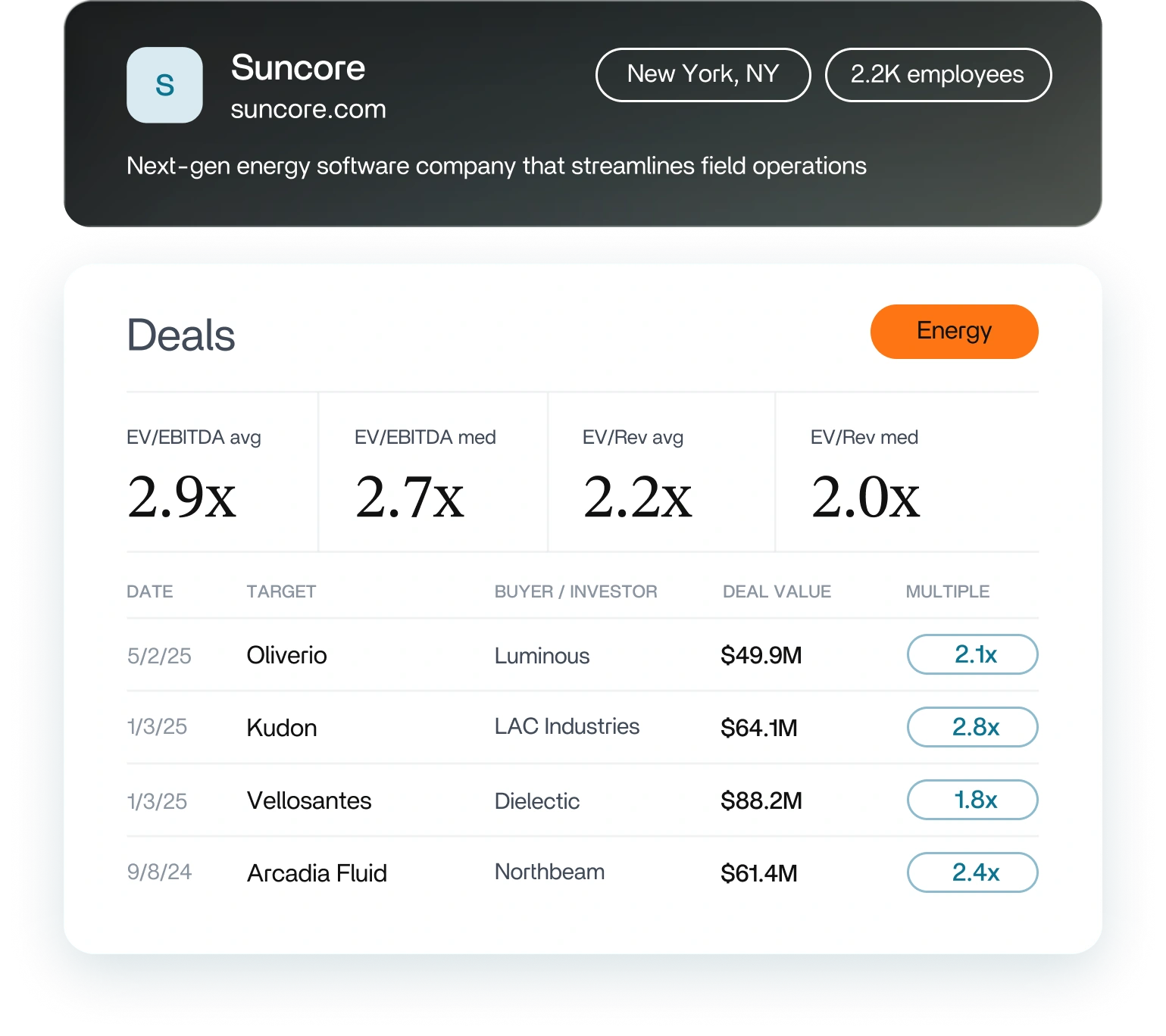
WHY GRATA INTELLIGENCE
Get verified insights into ~1M+ private market transactions across M&A, growth, and VC deals to understand deal value, multiples, and size and growth at the time of the transaction.
WHY GRATA INTELLIGENCE
Construct accurate, granular comp sets—either manually defined or agent-built—so you're always working off the most complete, accurate information.

WHY GRATA INTELLIGENCE
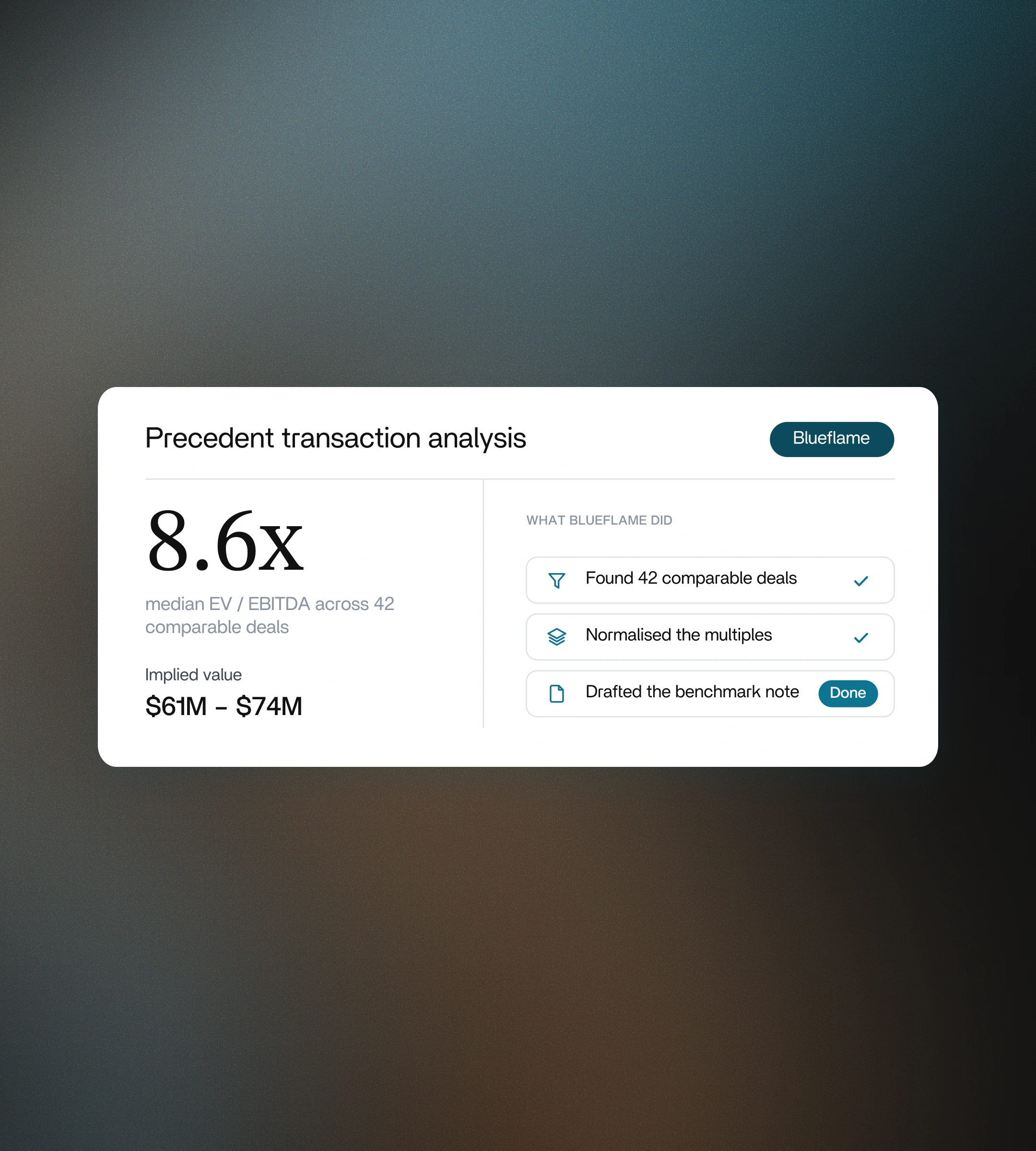
Ask Blueflame, Datasite’s M&A agent, to benchmark a given opportunity, build a comp set, or run a precedent transaction analysis for you, so you and your team can focus on other higher-value tasks.
WHY GRATA
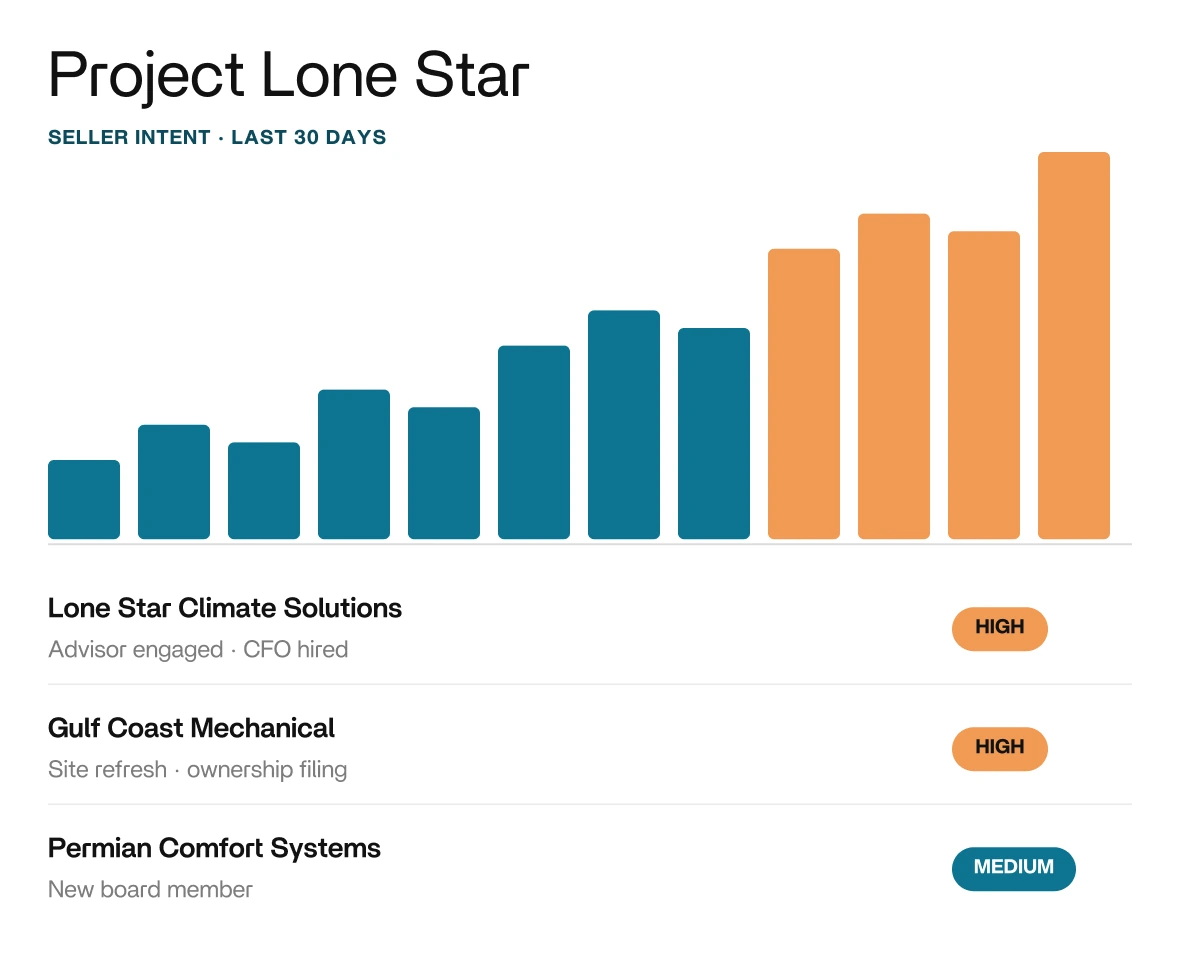
Proprietary signals from advisor activity, hiring, ownership changes and web behavior surface companies quietly getting ready to sell - ranked and explained.
WHY GRATA
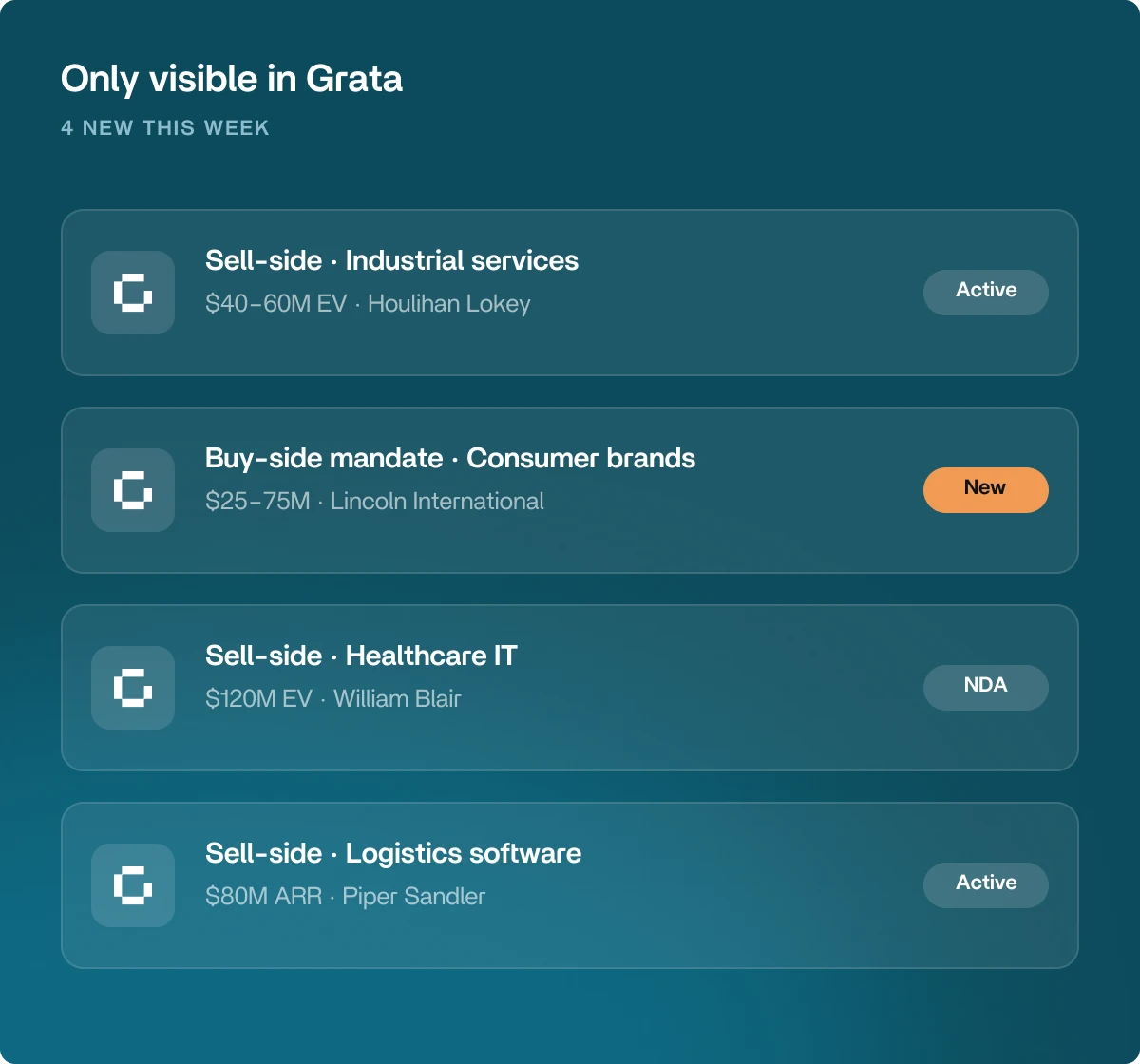
Grata is built into the Datasite ecosystem: sell-side processes, buy-side mandates and verified advisor relationships from the MergerLinks network - surfaced next to your company data.

Trusted by over 2,000 global customers
Grata Intelligence helps deal teams uncover opportunities, better understand their market, and fill the gaps on private transactions and financials that aren’t publicly disclosed.
Compare similar deals by industry, size, business model, ownership, date, and more, to quickly validate information on the go: at conferences, in client meetings, on banker calls, and more.


Price deals accurately with granular comp sets
Blueflame retrieves, reasons, and analyzes to build accurate, nuanced comp sets, so you’re never overpaying for a deal because it wasn’t valued correctly. Comp sets can be requested with rationale on why each company was included to ensure full confidence.
Zoom out — have Blueflame leverage Grata Intelligence’s deal data to analyze trends at the sector level. With historical deal volume, transaction performance, and valuation trends, it’s easier than ever to make defensible go/no go decisions on a given industry.
Straight answers on how Grata Intelligence unlocks deal data.
Most private transactions and financials aren’t publicly disclosed, leaving analysts with incomplete or delayed information on buyers, sellers, and market trends.
They rely on signals such as leadership changes, acquisitions, fundraising activity, and market movements to infer deal velocity in less transparent sectors
Teams analyze historical deal patterns, active buyers, repeat acquirers, and portfolio behavior to map the competitive landscape.
The Blueflame agent surfaces proprietary private market intelligence, transaction signals, and validated deal activity. This helps teams uncover opportunities that may not appear in traditional market coverage, without manually piecing signals together.
Yes. Describe the industry or buyer profile to Blueflame, and it will highlight recurring buyers, acquisition streaks, sector-level patterns, and the strategic focus areas of active acquirers.
Blueflame surfaces prior acquisitions, investment trends, leadership activity, and growth signals in response to a natural language request, helping teams assess a company’s trajectory and strategy without running separate searches for each signal.
Yes. Blueflame can map buyer attributes, industry focus, deal history, and portfolio behavior — helping teams predict which firms are likely to pursue similar targets.
Yes. Users can ask Blueflame to explore how deals cluster across niches, understand market consolidation, and identify sectors where acquisition activity is accelerating, all from a single thesis description.
Faster competitive mapping, clearer buyer lists, greater visibility into private transactions, and more confident thesis validation and outreach planning.



Give dealmakers more capacity to execute complex work across the lifecycle, grounded in the context needed to make better decisions and focus effort on the opportunities that matter most.