
AI & Automation
Buy-Side
How AI Agents Are Changing Investment Committee Preparation
Discover how AI agents are transforming investment committee preparation by streamlining research, updating IC memos, and strengthening investment analysis.



Every dealmaker has been there: A banker calls about a platform acquisition that looks perfect on paper. But by the time the call comes, three other bidders know about it. Valuation expectations have moved. You never had the chance to build the relationship that would have locked in that proprietary deal.
Companies come to the decision to sell gradually — often a year or more before a banker is hired or an auction launches. To win, deal teams have to see those signs before their competitors do.
In this guide, the Grata team breaks down how sale preparation unfolds inside a company, why the signals that dealmakers typically rely on keep arriving too late, and the behavioral intelligence that's changing the game.
Many deal teams still treat the moment an investment bank receives a mandate as the beginning of the M&A process. In reality, the mandate is often one of the last steps.
Business owners spend months working through the decision before anyone outside the company knows it's happening. They evaluate personal goals. They have quiet conversations with family or leadership about succession. They explore strategic alternatives. They clean up financial reporting and tighten operations. They have informal consultations with advisors. All of this happens long before a formal process kicks off.
Imagine a founder who spends a year preparing the business before ever engaging a bank. He brings on a controller to professionalize the books. He has a few conversations with a wealth advisor about what a sale would mean for his family. He starts attending conferences he never attended before. None of this is announced anywhere, but all of it is observable — if a buyer knows where to look.
Not every company follows this exact timeline. Some move faster, some slower, and some never complete the process at all. But the pattern holds often enough to matter: exit preparation creates an observable window well before the company is officially for sale. That's exactly where sophisticated deal teams find their opportunity.
Dealmakers have historically relied on a familiar set of indicators to infer that a company might be approaching a sale:
These signals still anchor most private equity deal sourcing programs today. The trick is, while they can hint at readiness, they don't necessarily show true intent.
There are other, subtler behaviors that emerge a year or more before any bank gets a mandate. A founder brings in a controller to professionalize the books, has quiet conversations with a wealth advisor, or maybe starts attending conferences he never attended before. These are stronger indicators that a company is actually gearing up for a sale.
None of them are announced anywhere, but all of them are observable if a team knows where to look.
Sophisticated deal teams are shifting their attention from isolated events to changes in behavior.
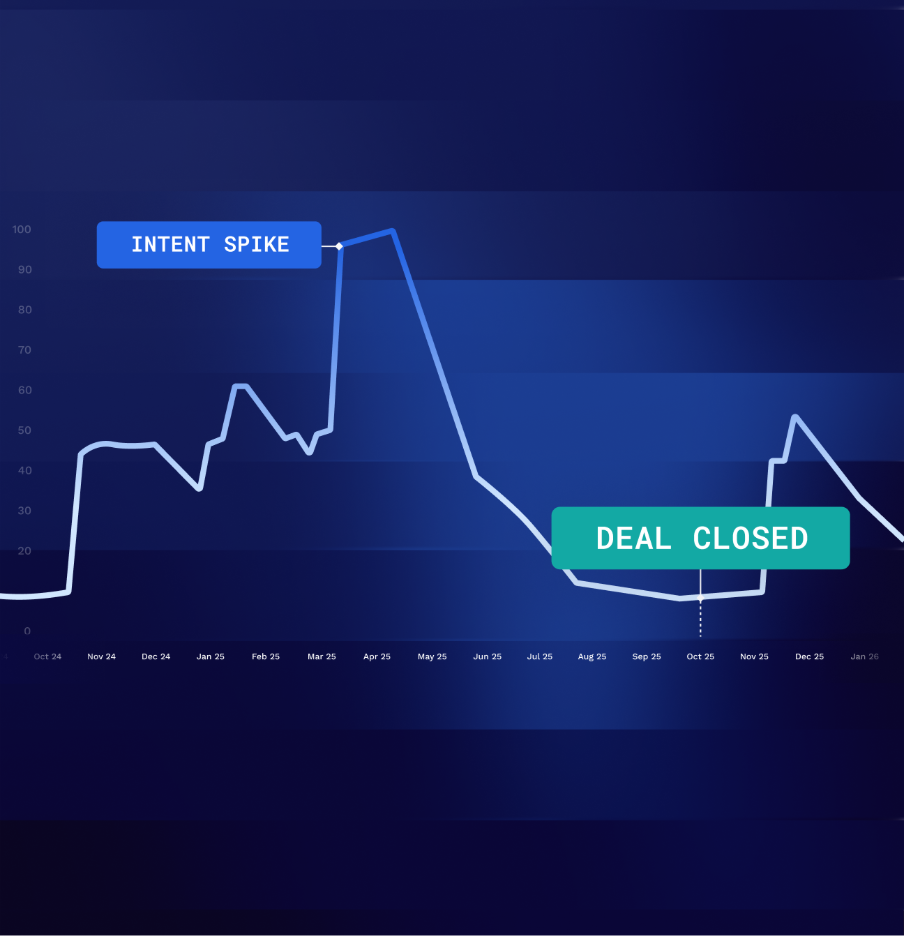
Behavioral models like Grata’s Seller Intent look for patterns in signals that traditional sources overlook. No single data point confirms anything. But when tracked together and over time, they can surface patterns that indicate a company is preparing to sell six to 12 months before a formal deal process starts. Dealmakers who have access to these signals can act much earlier than their competitors, giving them a massive advantage.
Want to learn more about how Seller Intent works? Join the Grata team for a webinar on August 11 at 12pm EST. Register here.
Early signals only add value if they are actionable. Here’s how dealmakers can work early deal intelligence into their processes.
Score each target on your list on these three factors:
These three questions help the firm decide whether they should engage a particular company now or wait. A target that scores well on strategic fit and relationship potential but shows no behavioral intent might not be worth prioritizing this quarter. Teams should focus their limited time on reaching out to targets that score well across all three areas. By nurturing relationships with under-the-radar companies showing intent to sell, teams are more likely to secure proprietary deals.
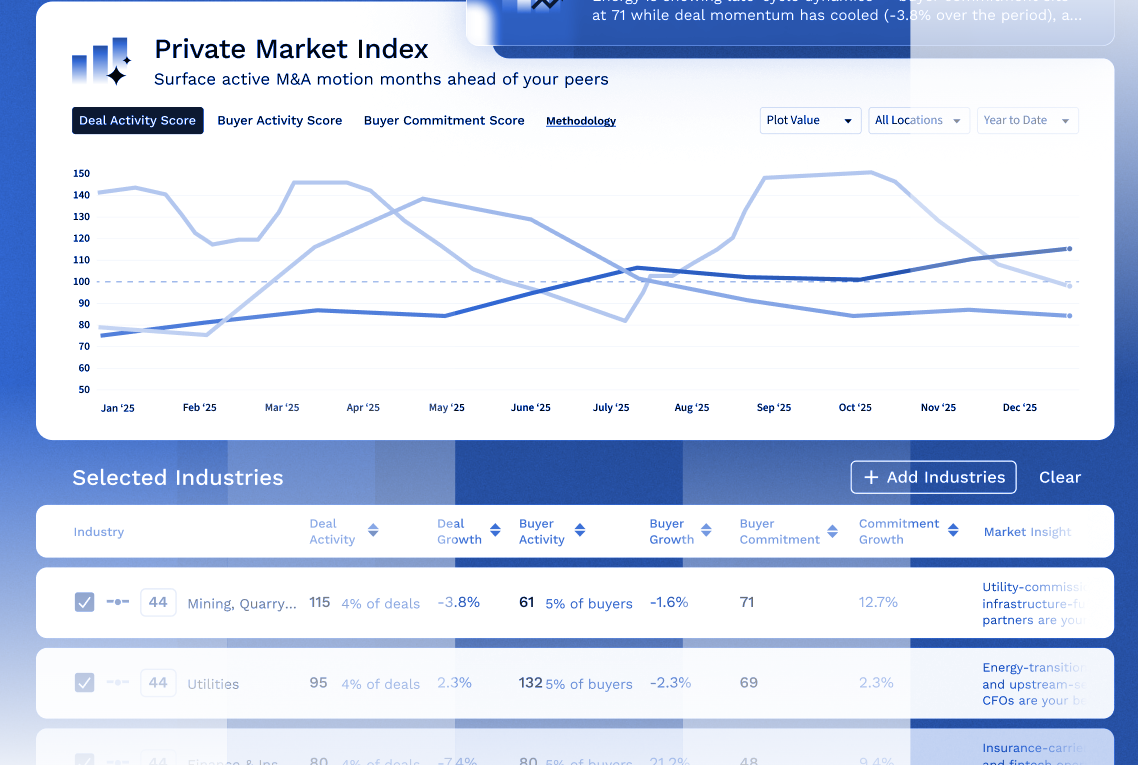
Technology is crucial for success here. A team tracking hundreds of companies needs a deal sourcing engine that monitors continuously, updates target lists as behavior changes, and feeds directly into their CRM so the highest-priority calls happen first. Grata’s platform combines investment-grade private market data and powerful AI workflows to make all of that happen. Instead of bouncing between spreadsheets, manual searches, and separate enrichment tools, dealmakers can run deep company searches, analyze firmographics, map ownership, and surface early opportunities without opening a new tab.
Ultimately, everything goes back to supporting relationship building. When private market investors have access to AI-powered workflows supported by investment-grade data, nurturing relationships with other decisionmakers becomes much more seamless.
No model predicts a specific outcome with certainty. Behavioral intelligence measures probability, not guaranteed results. Many flagged companies never transact, and that's expected: the goal is early prioritization across a large universe of targets, not confirmation of a specific deal.
As early as the relationship can support a genuine conversation, ideally before a formal process exists. Reaching out while a company is still privately evaluating its options tends to produce a very different kind of conversation than reaching out once an auction has already launched.
Early signs tend to be quiet and easy to miss individually: informal conversations with advisors, a shift toward more formal financial reporting, hiring a CFO or controller for the first time, or a founder beginning to attend industry events they haven't attended before. None of these confirms an exit on its own, but together they build a stronger case.
Eventually, most do, but not at the start. Many companies work through months of internal deliberation, informal advisor conversations, and operational cleanup before a bank ever gets involved. By the time a bank is engaged, the company has usually already made most of its decisions.
Company fit describes whether a target matches a firm's thesis on industry, size, and geography. It's static and doesn't change much over time. Seller intent describes whether that company is actively showing behavior consistent with preparing for a transaction right now. Fit tells you whether to care about a company. Intent tells you when to act on it.
They're becoming harder to find through traditional channels like broker relationships and conference conversations, since more buyers are competing for the same handful of intermediary tips. Off-market opportunities still exist in large numbers, as Grata's Hidden Gems Report found across several high-momentum industries, but finding them increasingly requires behavioral intelligence rather than relationship-based sourcing alone.

Monthly tactics from Grata’s team and operators.
From market trends to career advice, Grata’s content fuels smarter decisions.
.png)
.png)

.png)
.webp)