.avif)
AI & Automation
Datasite Brings AI to the Entire Deal Lifecycle – from Target to Transaction
Grata Intelligence and Datasite Connect allow deal teams to use AI from opportunity discovery through diligence while retaining document-level permissions.


The private market is vast, opaque, and dispersed. It’s also more competitive than ever before.
Most private companies lack public data, making it difficult for dealmakers to evaluate business models, validate if a company fits a thesis, gain a complete understanding of a market, or connect with decision-makers efficiently.
To win, private market dealmakers need a reliable, efficient deal sourcing engine. They need a system that offers thorough and accurate data, seamless workflows, verified contact data, and reliable, current market signals.
In this guide, we break down everything you need to know about building a winning deal sourcing engine.
In today’s hyper-competitive market, private market dealmakers cannot afford to rely solely on inbound deal flow. Rather than waiting to be approached, successful dealmakers have to be proactive about finding new opportunities.
Proactive deal sourcing involves:
Dealmakers who effectively employ proactive sourcing strategies will have some major advantages over those who lean on inbound leads:
Additional Reading:
To effectively leverage proactive sourcing, dealmakers need the right tools. Below, we break down the pillars that uphold modern deal sourcing infrastructure.
Public markets are highly visible and regulated. Every listed company is required to report detailed financials, performance metrics, governance structures, and risk disclosures.
This transparency enables reliable benchmarking and valuation, confident investment decisions, and efficient market dynamics for dealmakers. But public companies are just the tip of the iceberg.
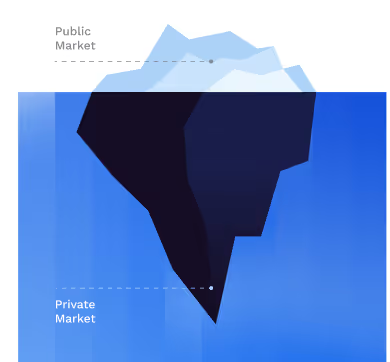
Source: Grata
To win in their space, dealmakers need high quality, comprehensive coverage of their entire market. That means they need software tools that provide full visibility into these crucial data dimensions:
Additional Reading:
Investment banks need to integrate tech-based platforms into their strategy to help make connections, nurture relationships, and research markets to suss out promising opportunities.
For example, some of the features offered by Grata’s private market platform include:
Additional Reading:
Data and technology might surface the right deals, but relationships win them. Effective deal sourcing infrastructure supports seamless documenting, tracking, and management of those relationships.
While traditional CRMs can support straightforward sales processes, M&A relies on long-term relationship development and complex, multi-stakeholder workflows. The dealmaking process often involves shifting priorities, evolving expectations, and longer timelines. Without a platform tailored to these nuances, teams end up with siloed data, inconsistent processes, and limited visibility into both relationships and deal flow.
Grata’s platform connects directly with CRMs like Salesforce, Hubspot, DealCloud, and Affinity so that deal teams always have their latest relationship updates right in front of them. The bi-directional sync allows dealmakers to see their CRM data directly in Grata, so they can sort by priority and date of last interaction. They can also push new information to their CRM without leaving Grata.
Additional Reading:
When it comes to building a sourcing engine, accessibility is just as important as depth. Private market investors have to be able to seamlessly integrate the data into their processes. To work efficiently and make smarter decisions, they need the right AI-powered workflows.
For sourcing, that means going beyond surface-level searches. Dealmakers need deep search capabilities to surface adjacent markets and lesser-known opportunities.
Teams should also look for opportunities to access live deal mandates and easily connect with other dealmakers to make sourcing faster and more relationship-driven. One way to do this is through the Grata Deal Network. Dealmakers can learn more here.
Seamless pipeline management is also crucial for successful deal sourcing infrastructure. Dealmakers need tools that provide structure, adaptability, and collaboration. For example, Grata’s Pipeline Management tool allows dealmakers to create custom labels and filters that match their individual processes, track outreach, and log insights so that deal context is always easily accessible.
Additional Reading:
In order to operate with the speed and agility required to win, dealmakers need to have their fingers on the pulse in their market. They need to know about factors like executive departures, new product launches, regulatory shifts, or sudden hiring spikes as soon as they happen.
Accessing these signals in a single place dramatically improves investors’ ability to tap into proprietary opportunities before they hit the broader market. The Grata platform, for example, allows dealmakers to receive automated alerts for key signals from their target companies.
Grata users can also access live, vetted deals before they hit the market through the Grata Deal Network. Private equity and corporate development teams can filter deals by industry, EBITDA, geography, and fit to their mandate. If they find a good fit, they can reach out to the advisor directly to put the ball in motion. On the flip side, advisors can use the Grata Deal Network to generate inbound interest for their deals from high-quality buyers.
Additional Reading:
In today’s ultra-competitive market, winning deals comes down to speed and agility. AI plays a huge role in helping dealmakers not only find more relevant targets, but beat their competitors to the punch.
Today, nearly half of dealmakers (49%) use AI tools nearly every day, according to a recent Sourcescrub survey. Deal teams are integrating AI into their workflows to quickly analyze huge amounts of complex data to enhance due diligence, improve valuation accuracy, and streamline post-merger integrations – especially when those AI tools are connected through seamless platform integrations.
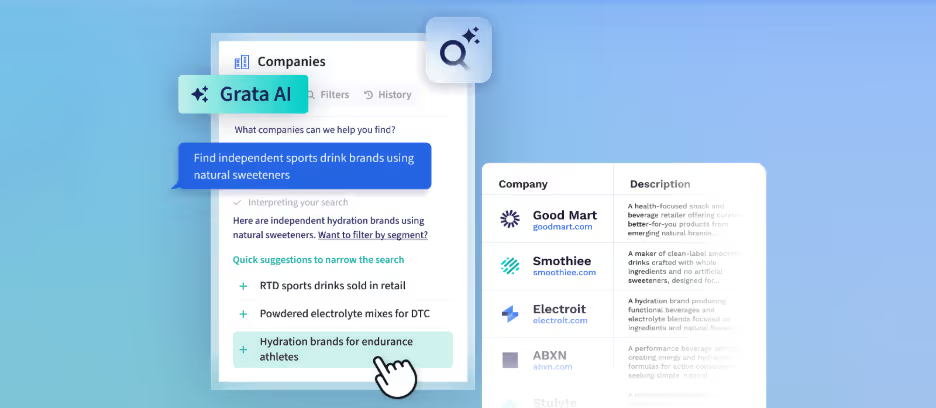
Source: Grata
And the tech is evolving rapidly. Generative and agentic models — including Grata’s Agentic Search — will have a massive impact on dealmaking processes and the M&A world at large in the coming years. Firms that foster a culture of AI adoption and fluency stand to gain a huge competitive advantage over their less tech-savvy peers.
However, to fully reap the benefits of AI in M&A and add value to their firms, dealmakers must be discerning in which tools they use. For example, with new large language model (LLM) startups popping up all the time, it might seem like dealmakers have a plethora of tools to choose from to make their workflows more efficient. But the vast majority of LLMs are not purpose-built for M&A. If you look behind the curtain in these platforms, you’ll find huge amounts of information scraped from public websites.
Dealmakers need AI tools that understand the private market the way they do. Look for purpose-built AI that:
These three key qualities power smarter search, relationship scoring, pipeline updates, and more — all of which accelerate dealmakers’ speed to conviction.
Additional Reading:
Private market dealmakers can set themselves up for long‑term success by building simple, scalable workflows that turn early signals into real relationships. Instead of relying on memory or scattered notes, teams should use a clear process for tracking targets.
Private market intelligence platforms like Grata make this much easier. They provide crucial, current data about company growth, leadership changes, fundraising, and sector trends all in one place. And because dealmakers can seamlessly sync crucial insights with their CRM, teams can spend more time talking to founders and less time digging for context.
Purpose-built AI tools — particularly ones that leverage agentic AI — are crucial for success. Instead of manually researching industries or revisiting target lists, agentic tools continuously scan for updates and flag new competitors, shifting momentum in a market, or new companies that fit your thesis.
One tool to note here is Grata’s Agentic Search, which transforms the Grata platform into your personal AI analyst. It interprets your intent, connects market dots, and surfaces opportunities before you even think to filter for them. The agent understands context and draws on Grata’s investment-grade data to quickly provide the most relevant information. Instead of spending precious time and cognitive load formulating the exact right keywords, filters, and single queries to arrive at an answer, dealmakers can interact with Agentic Search the way they would interact with an analyst.
The most effective deal teams combine automation with collaboration. Simple triggers —like reminders to check in with a founder, auto‑generated company briefs before meetings, or updated profiles as new data comes in — help create consistent coverage over time. When these workflows run smoothly, firms build stronger long‑term relationships and are top of mind when a company finally decides it’s time to engage on a deal.
Additional Reading:
When data, search, workflows, and collaboration all live in separate tools, teams waste time stitching things together and often miss signals. End-to-end deal sourcing platforms are essential because they allow dealmakers to manage every step of the dealmaking process all in one place.
Grata combines investment-grade private market data and powerful AI workflows in a single, user-friendly platform. Instead of bouncing between spreadsheets, manual searches, and separate enrichment tools, dealmakers can run deep company searches, analyze firmographics, map ownership, and surface early opportunities without opening a new tab. That simplicity matters: it keeps sourcing fast, consistent, and scalable.
Ultimately, everything goes back to supporting relationship building. When private market investors have access to AI-powered workflows supported by investment-grade data, nurturing relationships with other decisionmakers becomes much more seamless.
That’s how a platform like Grata becomes not just a tool for surfacing targets, but the backbone of a firm’s entire proactive sourcing engine.
Additional Reading:
The first thing that dealmakers have to understand about building a successful sourcing infrastructure is that investment-grade data has to be the foundational layer. There are essentially two options for acquiring that layer:
Teams with deep data engineering, devops, data science, and AI resources sometimes choose to build their own proprietary data systems for a competitive edge and privacy.
More often, however, dealmakers opt to buy subscriptions to private market platforms like Grata. They get all of the benefits of a custom-built tool without the hassle of building and managing the infrastructure.
Grata offers the perfect balance between building and buying. Investors can buy a subscription to the dealmaking platform or leverage Grata’s API to access all of the data and algorithms in their own system.
Additional Reading:
To be effective, deal sourcing infrastructure needs to be comprehensive and air-tight. Here are the most common gaps that cost dealmakers wins:
Additional Reading:
Grata’s game-changing AI and investment-grade data eliminate workflow disruptions and provide seamless access to investment-grade data for 21M+ companies across the private market.
Find better opportunities, screen deals with precision, and connect with the right decision-makers faster. Schedule a demo today to get started.
Deal sourcing infrastructure is the combination of processes, tools, data systems, and workflows that help firms identify, track, evaluate, and prioritize investment opportunities.
AI is making the deal sourcing process faster and more precise. AI-powered tools, like Grata’s Agentic Search, can surface more relevant companies, flag market signals, and identify trends that align with a firm’s investment thesis. AI also helps deal teams move faster by reducing time spent on manual research and surfacing patterns and adjacencies that dealmakers might otherwise miss.
CRM systems centralize relationship data, track interactions with founders and advisors, automate outreach, and provide visibility into deal pipelines so firms can manage sourcing more efficiently and consistently.
Firms pull from private company databases, industry news, transaction databases, proprietary outbound lists, conference data, advisor referrals, and internal relationship networks.
Deal sourcing signals are indicators that a company may be ready for transacting — such as rapid growth, leadership changes, fundraising activity, hiring trends, industry shifts, or founder willingness to engage.
They combine CRM, data providers, workflow tools, analytics, and communication tools into an integrated stack that supports sourcing, scoring, outreach, and pipeline management.

Monthly tactics from Grata’s team and operators.
From market trends to career advice, Grata’s content fuels smarter decisions.

.avif)

.avif)
.avif)