Agentic Search vs. Natural Language Search: What’s the Difference and Which One Is Better for M&A Workflows?

New AI solutions for M&A workflows are emerging rapidly, but some are more sophisticated than others. Discover why Agentic Search is superior to natural language search for dealmaking processes in Grata's latest guide.
Search
AI & Automation
Agentic Search vs. Natural Language Search: What’s the Difference and Which One Is Better for M&A Workflows?

New AI solutions for M&A workflows are emerging and evolving so rapidly that it can be difficult to keep up.

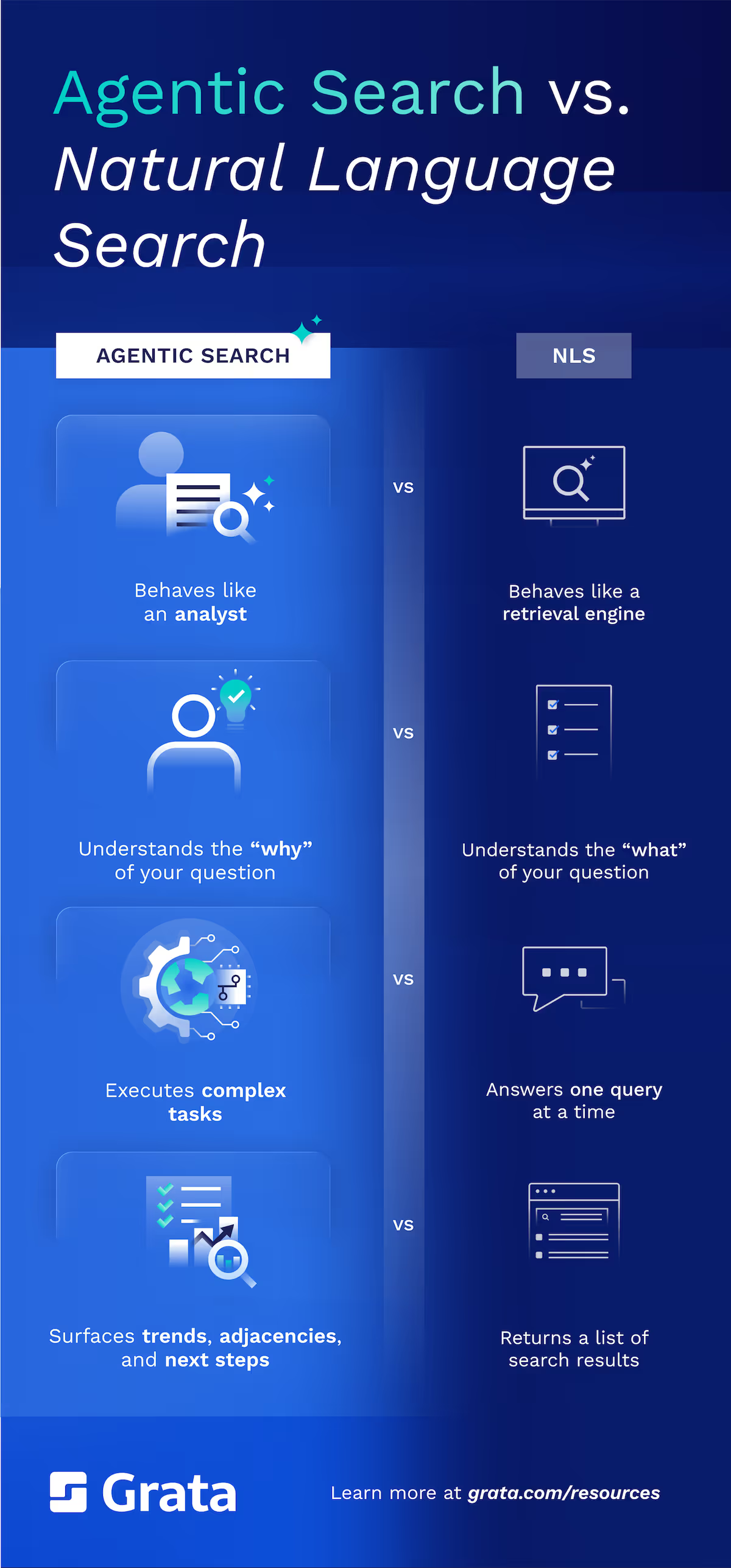
Below, we explain the difference between natural language search (NLS) and Agentic Search and how each one impacts dealmaking workflows.
Key Takeaways

  • Natural language search understands your question, but not your intent. It can provide answers to single queries, but it can’t support the multi-step reasoning real M&A workflows require.
  • Agentic Search acts like an analyst. It interprets context, prioritizes tasks, and helps you explore ideas, refine theses, and surface targets faster.
  • For dealmakers, Agentic Search means more precise sourcing and faster screening. This accelerates speed to conviction, providing a major competitive edge.

What Is Natural Language Search?

NLS is more intuitive than traditional keyword search because it allows the user to ask questions in plain, conversational phrasing. Instead of trying various keywords to surface the right companies and then refining with filters, you can simply ask something like, “Show me HVAC service companies in the Southeast with recurring revenue.”

On the upside, NLS tools reduce the friction and trial-and-error involved in searching for targets. However, NLS can only address one query at a time, and it still behaves like a retrieval engine rather than a research partner. It can understand the what of your question, but not the why.  

M&A decisions aren’t made through isolated questions — they require exploration, reasoning, and adaptation. NLS isn’t designed for that level of complexity.

What Is Agentic Search?

Grata’s Agentic Search, on the other hand, is designed for that level of complexity. Instead of returning a static result set that matches the language of your query, Agentic Search susses out your intent, creates a plan, and collaborates with you the way an analyst would.

Dealmakers can ask Agentic Search broader questions, such as, “I’m looking at the property maintenance industry. What should I know about the space?” The AI agent doesn’t just retrieve companies; it interprets the context, surfaces trends, offers suggestions to explore adjacencies, and provides guided next steps.

Agentic Search Supercharges M&A Workflows

Speed wins deals. Agentic Search accelerates the slowest, most manual parts of sourcing, screening, and early diligence. That means:

1. Faster, deeper thesis development

Instead of scouring through market reports, applying different filters, and sifting through company lists, Agentic Search automates the bulk of the discovery process so you get to conviction faster.

2. More precise sourcing

Traditional sourcing tools dump results; Agentic Search curates them. It understands which characteristics actually make a strategic fit and refines your search in real time, reducing noise and deepening the pool of potential targets.

3. Instant follow-up analysis

With NLS, every step requires another query. Agentic Search generates the next steps for you.

For example, if you tell Agentic Search, “Show me founder-owned HR services companies,” the tool:

  • Recommends segments
  • Breaks down trends in the space
  • Surfaces adjacent categories worth exploring
  • Creates a refined shortlist of prospects

4. Smarter decisions, faster

Deal teams can get weighed down by information overload. Agentic search cuts through that noise, reducing the time between idea and validation, and helping dealmakers make smarter decisions.

Find the Insights You Need Faster with Grata

Grata’s game-changing AI and investment-grade data eliminate workflow disruptions and provide seamless access to investment-grade data for 21M+ companies across the private market.

Find better opportunities, screen deals with precision, and connect with the right decision-makers faster.

Schedule a demo to get started.

Subscribe to our newsletter

Monthly tactics from Grata’s team and operators.

Related
Articles

From market trends to career advice, Grata’s content fuels smarter decisions.

Datasite Wins Silver Stevie® Award for Technology Excellence
AI & Automation
Data/Analytics

Datasite Wins Silver Stevie® Award for Technology Excellence

Learn about the latest milestone for Datasite, Grata, and Blueflame AI's integrated dealmaking platform: winning the Stevie Award for Technology Excellence.
How to Build Better Private Market Target Lists
Sourcing

How to Build Better Private Market Target Lists

Learn how to turn a complete market map into a prioritized private market target list using strategic fit, relationship strength, and intent data.
The PE Playbook: Fire Safety
Industrials
Data

The PE Playbook: Fire Safety

Climate change, data centers, and new battery storage tech are posing unprecedented fire risks and reshaping fire safety M&A. Learn about the fire safety industry's fragmentation, growth trends, recent acquisitions, and more.
Hidden Gems: Actionable, Undiscovered Opportunities in IT Infrastructure
Data
Energy/Infrastructure

Hidden Gems: Actionable, Undiscovered Opportunities in IT Infrastructure

Learn about the undiscovered IT infrastructure opportunities in the Grata platform. Explore trends in ownership, market segments, and emerging M&A opportunities.
Why Proprietary Deal Flow Is Getting Harder — and How Leading Teams Are Adapting
Sourcing

Why Proprietary Deal Flow Is Getting Harder — and How Leading Teams Are Adapting

Proprietary deal flow is getting harder as generalist AI closes the access gap. See how verified private-market data and Seller Intent help dealmakers source before the competition does.
What Is a Data Room? A Private Market Dealmaker’s Guide
Data

What Is a Data Room? A Private Market Dealmaker’s Guide

Understand why private market deal teams need data rooms, the difference between a data room and a deal sourcing platform, and more.
How to Identify Companies Preparing to Sell Before the Competition
Sourcing

How to Identify Companies Preparing to Sell Before the Competition

Learn how to identify companies preparing to sell before a formal process starts, using behavioral signals that flag seller intent 6–12 months early.
Blue backgound