
Sourcing
M&A Deal Sourcing and Origination: Advanced Strategies and Tactics
Explore modern M&A deal sourcing and origination strategies. Learn how Grata helps firms discover, qualify, and connect with the right opportunities.

In The Rise of the Data-Driven Investor Part 1, we explored how firms are responding to increasing competition and pressure to drive returns through data. Since every firm subscribes to a data provider and collects basic financials from their portfolio companies, we reached the conclusion that data isn’t a check-in-the-box exercise to stand out from the crowd anymore.
Differentiation through data can only be achieved by making use of various proprietary and third party datasets in tandem and building robust processes to supplement the team’s area of expertise, strengths, network, and track record. Data isn’t a magic pill, it’s more like lifting weights– without proper planning and laser-focus, it stops being useful and instead can cause chronic issues / operational inefficiencies.
In Part 2 of The Rise of The Data-Driven Investor Series, we explore how firms can build effective workflows to optimize deal sourcing and due diligence.
A common piece of advice founders receive from investors is to “maintain focus.” The same is true with investors as well, in virtually every aspect of their business. Raising capital from LPs requires differentiation through focus, as does finding and winning deals — not to mention growing the portfolio and delivering consistent returns.
Before thinking about data, the first question fund managers should ask is: What is the team’s area of expertise? An obvious but important note: your firm cannot be an expert in everything. Though the term generalist investor gets thrown around, according to Grata, less than 5% of PE firms market themselves as generalists. 40% are thesis-driven, with the remaining mostly falling under the thematic investors umbrella.
Once the high-level strategy is set, investors can then start leveraging internal data from their portfolio to understand which strategies and sub-sectors the team has performed well in, and where the team had issues and why. Of course, the past isn’t indicative of the future, as markets change and companies evolve. Firms need to put their internal data into context with historical market data and examine the trends in deal performance across sub-sectors, changes in the competitive landscape, and emerging technologies that can be leveraged to deliver outsized returns.
Only by merging internal and external data, while analyzing the market not just through quantitative data but also qualitative factors, can investors set a truly differentiated strategy and execute on it.
The dream of any investor is to have high-quality inbound leads to drop into their lap. Content marketing, whether it be thought leadership on LinkedIn (the PE way) or sh*tposting on Twitter (the VC way) can provide some visibility and credibility to individual investors, although it’s usually not enough.
Jack Vawdrey at Vista Point Advisors says, “99% of firms look exactly the same from the outside. Even though every investor says they take a “differentiated approach,” just saying so doesn’t mean anyone will believe you.”
Founders, especially within the same industries, tend to know and speak to each other. There is no better inbound lead generation channel than word of mouth and that can only be achieved by providing real support to existing portfolio companies, once again highlighting the importance of building effective collaboration and data sharing processes through purpose-built systems.
Even though inbound can play a critical role in a firm’s deal pipeline, more often than not investors need to go outbound to find companies that aren’t active deals but could be through some convincing.
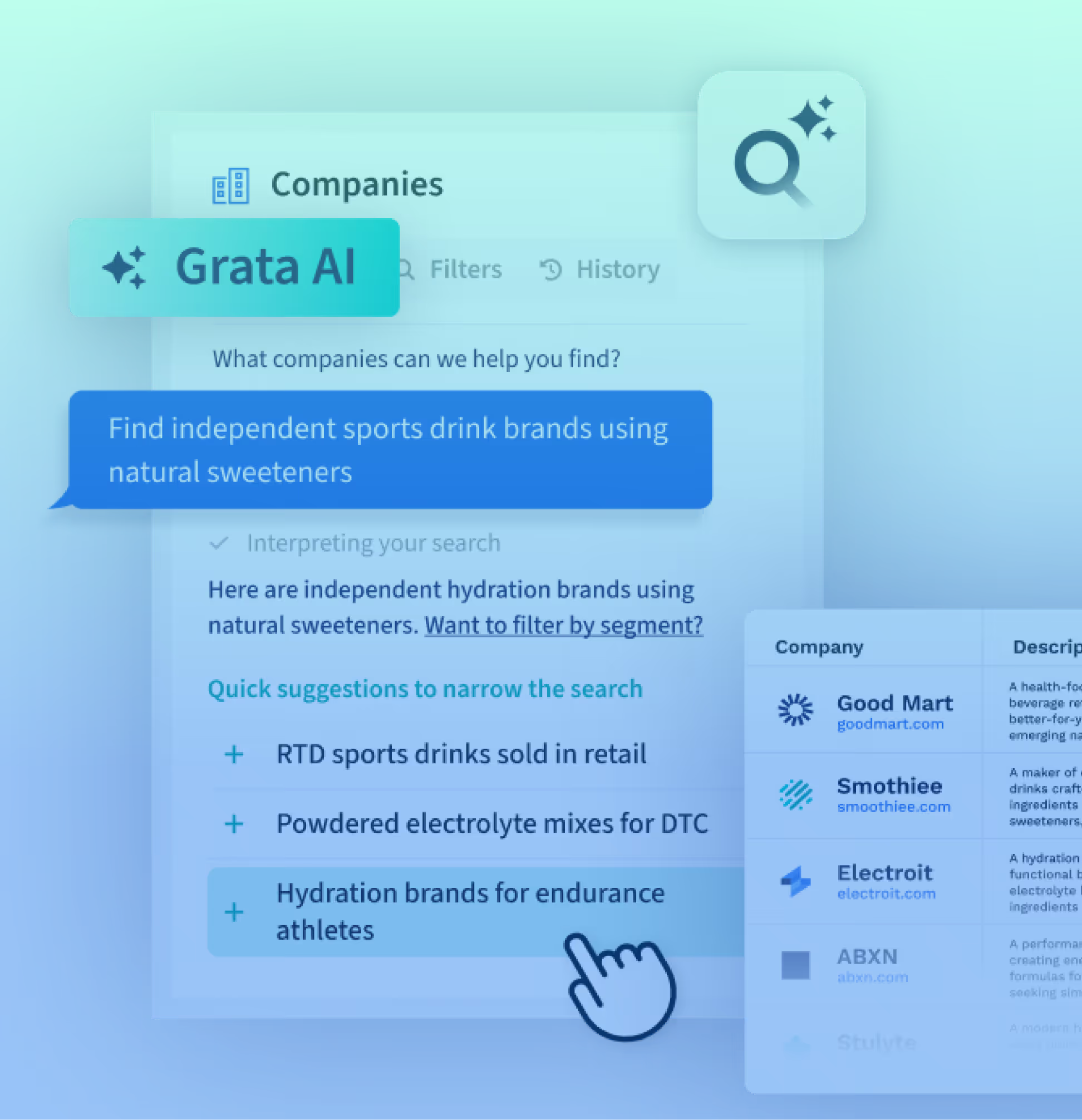
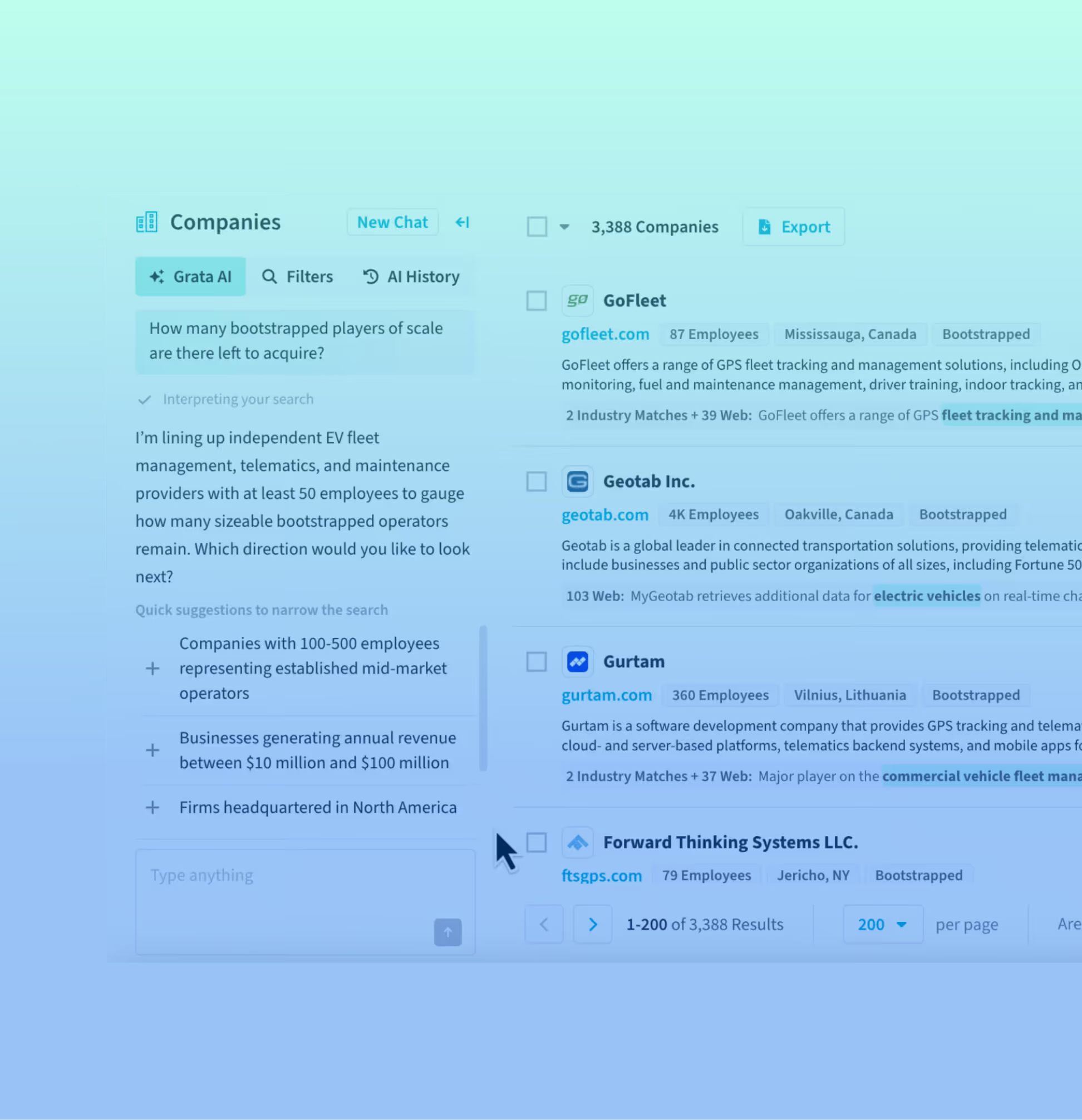
The first step is finding the right long list of potential opportunities. Most data providers boast about the millions of companies they track. Of course it’s important to cover a large surface area, but filtering by a certain sub-sector and receiving 10,000 results isn’t very helpful for most investors. What data providers should really be focusing on is data depth and how well firms can filter down to 500 good opportunities instead of 10,000 decent ones.
There are underlying reasons for this issue. Most providers offer static relational databases and there are usually missing fields that significantly limit the quality of filtering tools. On top of that, since everyone has access to the same dataset and basic filtering options, data is once again table stakes and not the path to differentiation– although this is starting to change.
Some investors have started training machine learning algorithms to identify opportunities that best fit their focus and expertise. This creates a unique list of opportunities for each firm which can then be qualified more effectively. Only so much information about a company will be publicly available, and there comes a point where dealmakers need to reach out to the business owners to progress with qualification and prioritization. Without direct communication, it’s impossible to know if a company is in conversations with other investors, what their financial statements look like and whether they’re willing to make a deal. By cutting down the list of 10,000 to 500, firms are able to allocate analyst resources more efficiently and focus on the right opportunities. With investor discovery, firms can see which investors are already active in a space and adjust prioritization before engaging founders.
Proprietary sourcing is no longer a nice to have, but a necessity. In a 2021 SPS by Bain & Co. survey found that on average 39% of the participants’ closed deals came from a proprietary source.”
The universe of investing opportunities has grown. Millions of companies fall under the US middle market banner account for 99% of all businesses and 50% of GDP. The traditional tactics of networking, conferences, and databases only scratch the surface of all the opportunities. Without the right data, many companies remain undiscovered even if they could be the right fit for a firm’s investment strategy.
While there was never a clear cutoff point for what piece of information is sourcing or due diligence, technology has blurred the line between the two steps even more. Effective due diligence relies on a strong sourcing strategy, but as always, there is more.
As much as the investors evaluate the company, the founders evaluate the investors. There are also lots of emotions involved, especially in M&A. This is where investors can really shine and differentiate through their track record. There have been many founders who regretted selling their company, even if it made them generational money, because the acquirers ran the company to the ground. When investors can back up their claims about post-investment support and collaboration through data and references, founders usually respond positively.
This is the long game. Differentiation boils down to not only choosing the right providers, but building adaptable and integrated workflows that fit each firm’s focus and expertise to leverage internal and external data to the greatest extent possible.
In the third and final installment of The Rise of the Data-Driven Investor, we will be covering how the right internal and external data can support effective portfolio management and investor relations.
Don’t keep sourcing in the dark. Make better use of external market data and build proprietary deal sourcing channels with Grata.
Stop flying blind when it comes to portfolio management. Capture more proprietary internal data and effectively collaborate with your portfolio with Standard Metrics.

Monthly tactics from Grata’s team and operators.
From market trends to career advice, Grata’s content fuels smarter decisions








.avif)