.png)
AI & Automation
Datasite Brings AI to the Entire Deal Lifecycle – from Target to Transaction
Grata Intelligence and Datasite Connect allow deal teams to use AI from opportunity discovery through diligence while retaining document-level permissions.


Ninety-six percent of dealmakers are using or exploring AI to help them source and screen deals, according to The New Deal Team report by FT Longitude and the Datasite Group. They're finding that, in private markets, purpose-built tools are absolutely crucial for success.
Generalist LLMs have many valid use cases. But in private markets, they operate on a picture of reality riddled with structural gaps. The firms that understand exactly where AI ends and verified intelligence — signals aggregated and confirmed by analyzing patterns that aren’t discernable using public models — begins will have a major competitive advantage. The ones that don't will find out too late.
This is piece one of a six-part series on AI, data, and private market intelligence. Read the second installment on building an AI-native sourcing engine here, and the third on what a complete market map actually requires here.
Nearly every private equity firm, investment bank, and corporate development team is asking a version of the same question right now: “We have AI. We can generate company lists, sector maps, and research summaries faster than ever. Do we still need to pay for a private market data platform?"
It's the right question. I've spent a decade building private market data infrastructure, and I don't think it has an obvious answer. But I do think the firms that get it right will have a real structural advantage. The ones that get it wrong won't know it until they're in front of an IC explaining why they lost a deal to a competitor who saw it first.
To be clear, AI is not the problem. We use AI ourselves. The productivity gains are real — from document processing to materials drafting, to research summarization, to natural language interfaces that make data more accessible across a firm, to workflow automation.
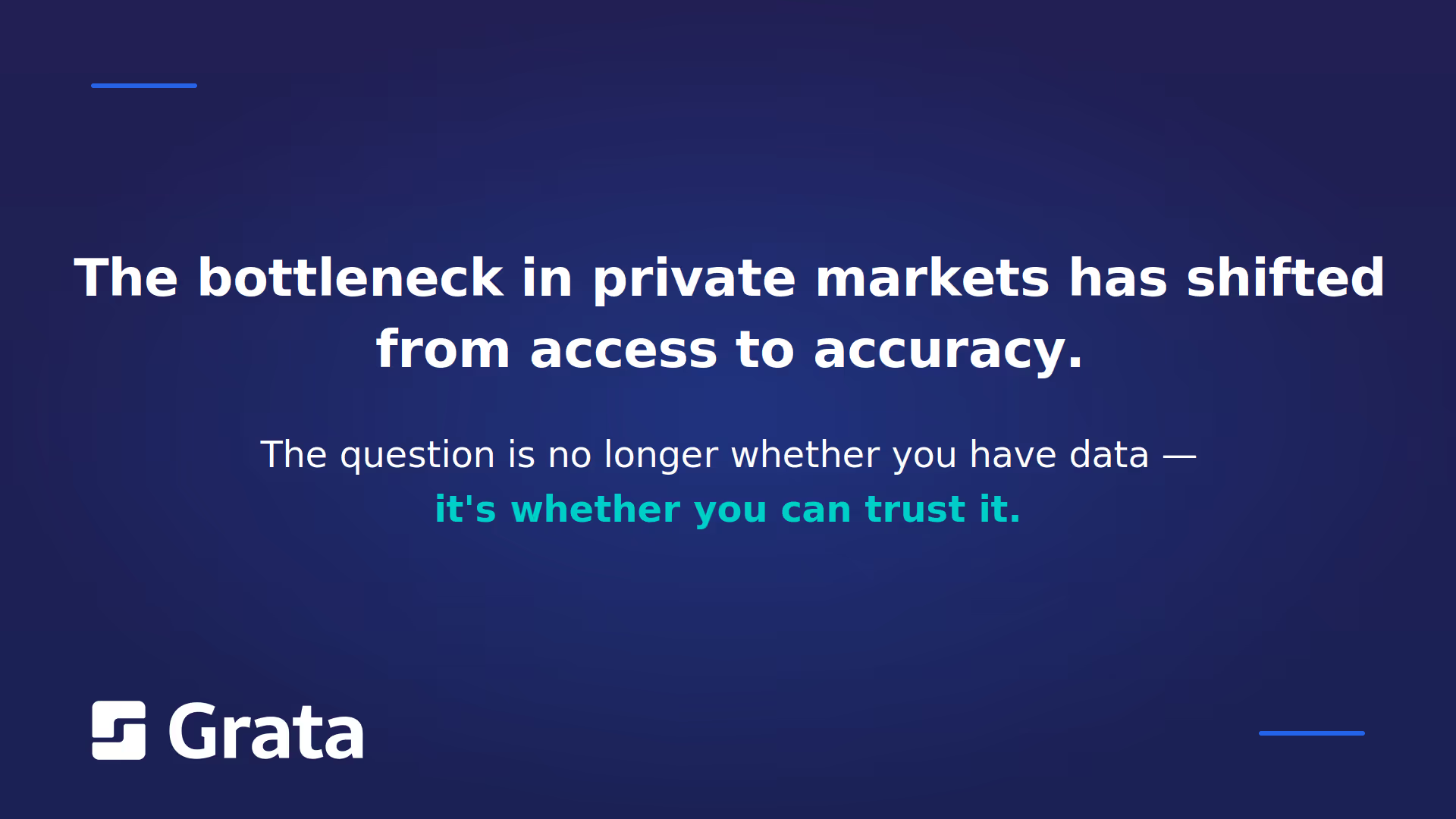
The issue is with precision. AI is only as good as the data behind it; and in private markets, the most valuable intelligence is structurally invisible to public models. That’s not because the models aren't capable — it’s because the data isn't there to be read.
In the private market, skimming the surface doesn’t cut it. You need AI tools that can dig deep into niches to deliver the visibility and precision required for investment decisions. LLMs can provide answers to your queries, but are those answers comprehensive enough to power your workflows?
Here are the key places where LLMs only scratch the surface and often lead to insufficient results for dealmaking use cases:
To see the full picture of your market, you have to be able to break through the surface. For that, you need AI built specifically for the private middle market.
.avif)
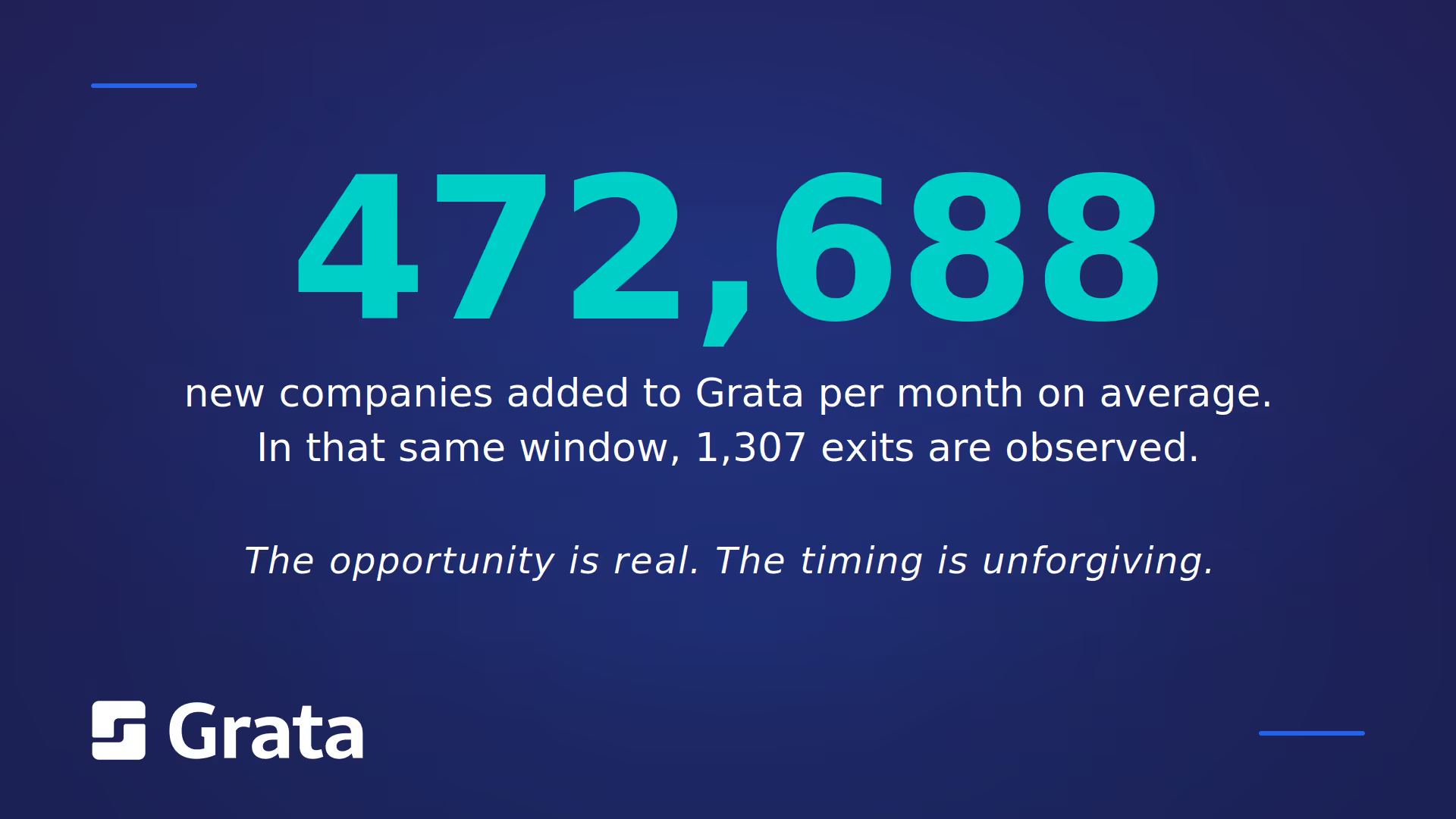
For context, nearly 50%of companies that get acquired are bootstrapped at the time of acquisition. No VC backing. No PE sponsor. Little, if any, press coverage prior to the acquisition. They exist in the private market generating revenue, building value, and approaching readiness to transact — and they are invisible to every model trained on public data.
This is a function of where the data lives. A significant portion of the most valuable private market intelligence exists in the world — not on the internet. Think: financial filings locked in scanned PDFs at European national registries, valuations that private companies never publicly report, and conference attendee lists that require registration or physical presence to obtain.
Accessing this kind of intelligence requires the infrastructure, relationships, and operational investment that takes years to build.
The clearest illustration of what structurally inaccessible data makes possible is Grata’s Seller Intent feature, which identifies companies in the early stages of sale preparation — typically six to twelve months before a process becomes competitive.
The model aggregates signals from behavioral patterns: a company's general research activity around transacting, engagement with investment banks, engagement with advisors, and engagement with potential acquirers. These signals surface months before any official announcement. LLMs cannot read these signals, because they're not published anywhere. Producing these signals requires the robust network infrastructure of a platform embedded in over 55,000 transactions per year.
Seller Intent’s predictive accuracy speaks for itself. Running our model on two years of historical transaction data, the tool accurately predicted 98.1% of US mid-market to large-cap deals and 89.2% of EMEA deals — with all positive alerts flagged at least eight weeks prior to the transaction date. Across all deal sizes globally, the model achieved 90% accuracy across industries with the highest acquisition activity in 2025, including no notable sector limitations.
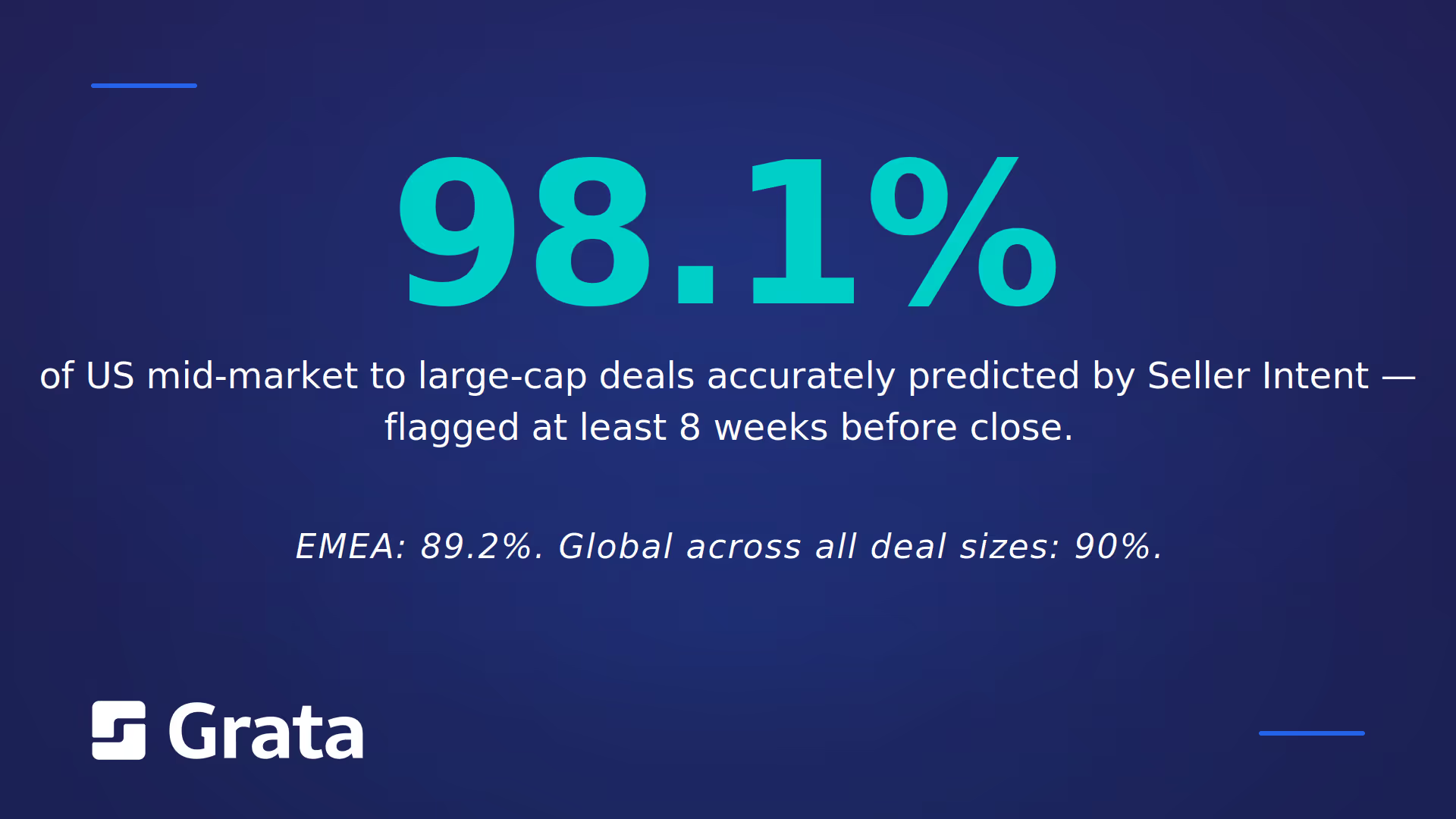
Source: Grata internal validation, 2025 transaction data.
Take, for example, Datasite's acquisition of Sourcescrub. Grata's Seller Intent flagged a spike in intent activity from Sourcescrub in Q1, peaking in March — five months before the deal closed and was publicly announced. That kind of lead time is the difference between a relationship-driven conversation and showing up to a process that's already been decided.
This structural advantage only exists because of the data architecture behind it — and it cannot be replicated by any model operating on public sources, regardless of computing power or funding.
The question every dealmaker should be asking isn’t, “Should I be using AI?” It’s, “what kind of data powers this particular AI?”
An LLM connected to verified, proprietary, M&A-specific data produces fundamentally different outputs than one operating on public web content. The model is the same. The gap in output quality comes from the data architecture underneath it.
Think of it this way: AI amplifies whatever it’s built on. If its foundation is unverified public data, the AI will amplify noise at scale. But if the model is built on a proprietary data set that’s continuously validated by a 500+ person research team, enriched with private access data that isn't on the internet, and compounded by exclusive deal intelligence from networks that only exist inside the Datasite ecosystem, it amplifies conviction.
Use AI for its true strengths. Don't confuse productivity with intelligence. The firms that will have a structural advantage in the years ahead are the ones that pair the speed of AI with the trustworthiness of verified data.
For every AI-generated output you act on in a deal workflow, ask:
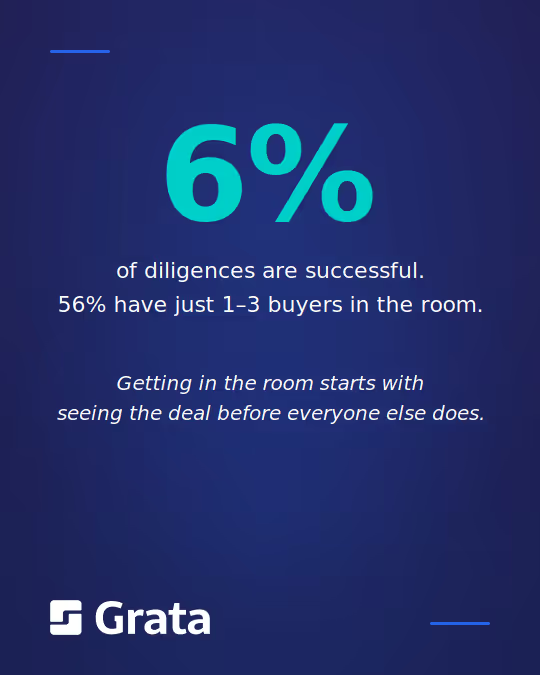
In private markets, the answers to those questions are the difference between a pipeline and a missed opportunity. Only 6% of deals that make it to the diligence stage actually close. 56% of those have just one to three buyers at the table.
The firms in the room when a deal gets done are there because their data was complete enough to find it and trustworthy enough to act on.
Source: Datasite Group
The arrival of powerful AI tools increases the need for verified private market intelligence. AI is only as good as the data it operates on, and in private markets, the most valuable data is structurally invisible to public models by design. It lives in relationships, in registries, and in behavioral signals that require years of infrastructure to access.
The private market is vast, opaque, and full of opportunity. Capitalizing on it requires firms to examine their tech stacks and ask, “What are we not seeing?”
You can’t win deals that you can’t see. Grata provides the coverage, data depth, and comprehensive workflows that private market dealmakers need to access the complete, verified picture of their industries.
Ready to see your space clearly? Schedule a demo today to get started.

Monthly tactics from Grata’s team and operators.
From market trends to career advice, Grata’s content fuels smarter decisions.

.png)

.png)
.png)