Private Equity
Market Trends
North America
The PE Playbook: Death Services
Understand the key private market trends shaping the death services industry - growth segments, M&A, and top roll-up strategies.



In 2025, M&A transactions in the EMEA market totaled some €1.2T — a 25% increase year-over-year. But even with renewed optimism, sourcing promising opportunities across Europe is more challenging than ever. The market is crowded, founders are inundated with inbound outreach, and data is often fragmented, making it difficult to quickly decide which companies are worth a deeper look.
In a recent Dealmakers Dialogues webinar hosted by Datasite and Grata, panelists Ben Cole (Director, FPE Capital) and Robin Suresh (Vice President of International Sales, Grata) broke down what’s really happening on the front lines of European deal sourcing and how leading firms are adapting.
Here's what you need to know.
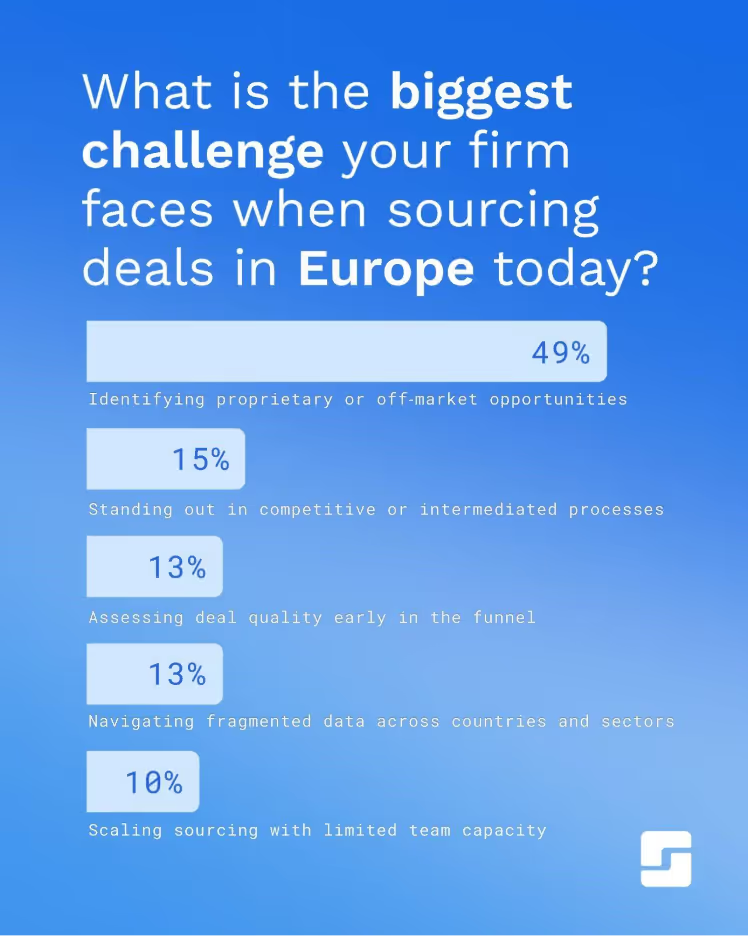
When webinar attendees were polled on their biggest sourcing challenge in Europe today, the answer was crystal clear: identifying proprietary or off‑market opportunities.
Founders today receive more cold outreach than ever thanks to the explosion of search funds, private credit players, new PE groups, and the growing availability of cheap email automation and LLMs. Cutting through that noise is no small feat.
For firms like FPE, the challenge isn’t spotting every company; it’s getting first meetings with the right ones. In a crowded market, specialization matters. Cole emphasized that focusing on specific subsectors where a firm has credibility, networks, and a clear “right to win” is now essential for getting founders' attention.
However, private market data in Europe remains deeply fragmented. Different countries use different reporting standards, languages, filing systems, and regulatory requirements. Even when required to disclose financials, private companies often provide minimal or outdated information.
That means deal teams spend hours stitching together data from registries, websites, filings, and paid tools just to assess whether a company is even worth a call. As Suresh put it, “Private markets don’t have a data problem — they have a clarity problem.”
To scale sourcing without growing headcount, firms are turning to technology. But not all tech stacks are created equal.
Platforms like Grata are gaining traction because they:
This shift lets deal teams move quickly from “investigative journalism” to actionable insights.
But intelligence alone isn’t enough. Execution tools like BlueFlame AI take that intelligence and automate research workflows, making outreach and diligence more efficient.
Together, these platforms help firms spend more time talking to founders and less time cleaning spreadsheets.
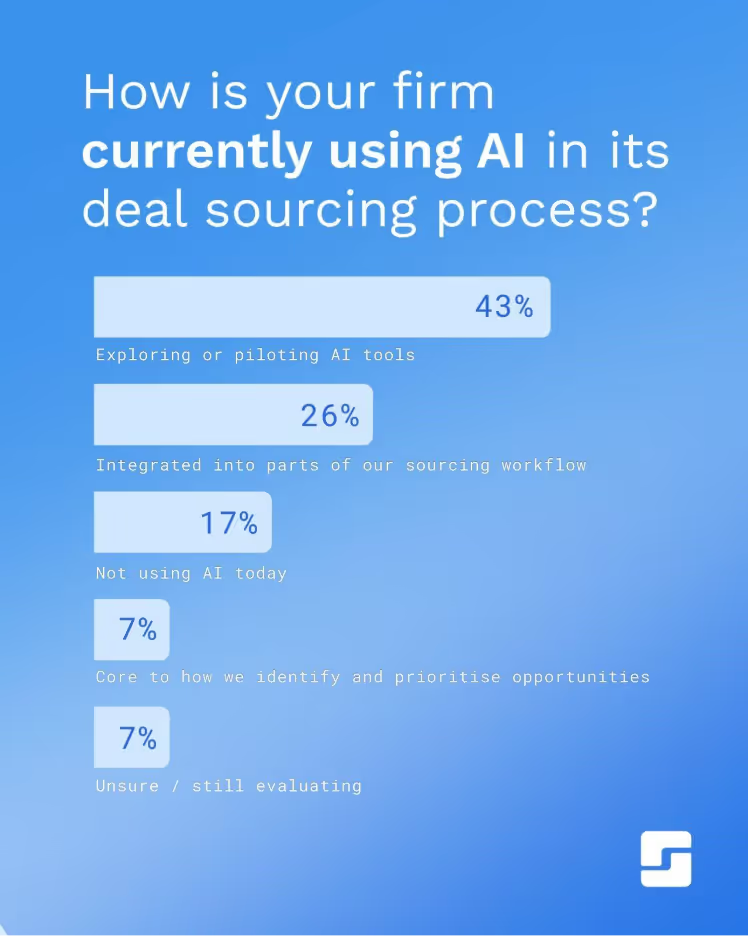
When asked how they use AI in sourcing:
But adoption is accelerating. FPE Capital already uses AI for screening, enrichment, outreach drafting, and conference prep, dramatically increasing productivity. Cole noted his team now meets three times more companies per month than they did six months ago thanks to smart investments in people, data, and AI.
Still, both speakers stressed a key point: AI is only as good as the data behind it. Dealmakers must take care to adopt tools that are purpose-built for M&A workflows and that have a strong foundation of data.
Additionally, keep in mind that AI is designed to augment human knowledge, not replace it. Human judgment and oversight are still essential.
Historically, large funds had a massive advantage because they could spend millions building proprietary sourcing systems.
That is no longer the case. AI-powered tools offer mid‑market firms similar capabilities at a fraction of the cost. Winning is no longer about size — it’s about speed, clarity, and execution. Mid‑market players with the right tech stack can absolutely outperform larger peers who are slow to adapt.
What Successful Sourcing Looks Like in Europe in 2026
Deal sourcing in the EMEA market is becoming more complex — but the opportunities are also growing. The firms that thrive this year will be those that:
In a market where everyone has data, the advantage goes to those who have clarity.
Grata’s game-changing AI and investment-grade data eliminate workflow disruptions and provide seamless access to investment-grade data for 21M+ companies across the private market.
Find better opportunities, screen deals with precision, and connect with the right decision-makers faster.
Schedule a demo to get started.

Monthly tactics from Grata’s team and operators.
From market trends to career advice, Grata’s content fuels smarter decisions.

.avif)

.avif)

.avif)